
Shoulder dystocia remains one of the most dreaded and litigated obstetric emergencies in modern maternity care. Though relatively uncommon — occurring in roughly 0.2 %–3 % of vaginal deliveries — its unpredictable nature and potential for severe perinatal harm mean that even expertly managed cases can have significant legal exposure.
In this blog, we’ll explore why shoulder dystocia leads to heightened OB liability, the role of system failures in obstetrics, and key clinical and process domains that can make the difference between safe outcomes and perinatal adverse outcomes litigation.
What Is Shoulder Dystocia — A Clinical Snapshot
Shoulder dystocia occurs when, after the baby’s head delivers, one or both shoulders become lodged behind the maternal pelvis, stalling delivery. Despite risk factors like fetal macrosomia or maternal diabetes, most cases are unpredictable and cannot be reliably prevented.
This unpredictability contributes directly to its litigation risk: clinicians and institutions are often judged on how they responded in real time rather than whether they predicted the event.
Why Shoulder Dystocia Cases Lead to Lawsuits
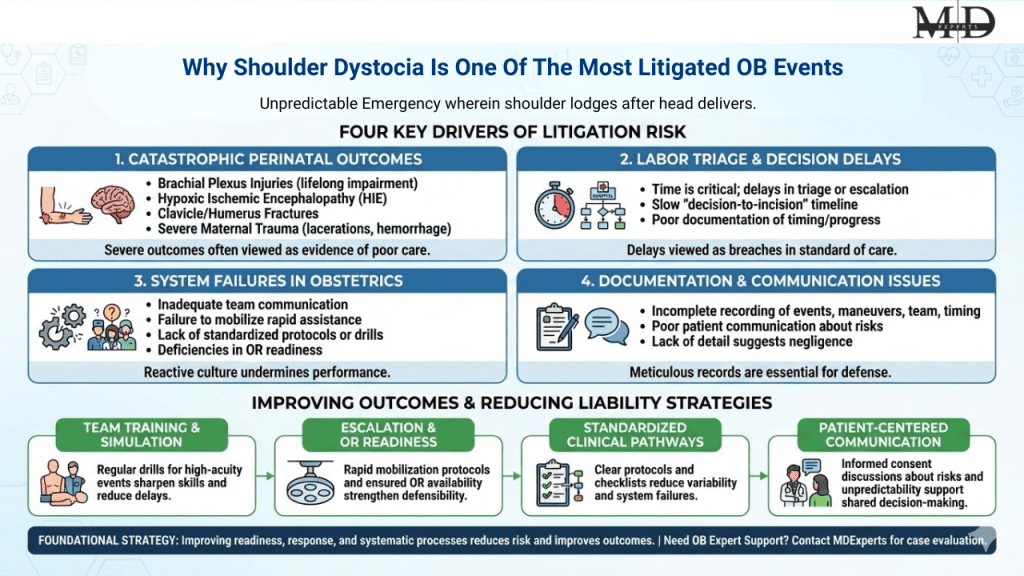
1. Catastrophic Perinatal Outcomes
Shoulder dystocia can result in serious complications, including:
• Brachial plexus injuries leading to lifelong motor impairment
• Hypoxic ischemic encephalopathy
• Clavicle or humerus fractures
• Maternal trauma like significant lacerations or postpartum hemorrhage
When these outcomes occur — particularly brachial plexus injury — families understandably seek explanations and accountability. Courts and juries frequently interpret severe consequences as evidence of poor clinical decision-making, even when the event was unpreventable.
2. Labor Triage Delays and Decision Delays
Time is critical once shoulder dystocia is recognized. Any labor triage delays — from initial assessment to escalation of care — can be viewed as breaches in the standard of care, especially if those delays result in fetal hypoxia.
Similarly, the oft-discussed decision to incision timeline for emergency responses (e.g., moving to cesarean delivery if maneuvers fail) becomes a focal point in defenses and prosecutions alike. Poor documentation of the minute-by-minute progress during an emergency can escalate liability.
3. System Failures in Obstetrics
Shoulder dystocia cases frequently expose system failures in obstetrics — not just individual errors. These include:
• Inadequate team communication
• Failure to mobilize rapid assistance
• Lack of standardized protocols or drills
• Deficiencies in operating room readiness OB liability safeguards
A reactive rather than proactive culture — where the team isn’t drilled on shoulder dystocia maneuvers — undermines clinician performance and increases legal risk.
4. Documentation and Communication Issues
Meticulous documentation (including timing of events, maneuvers attempted, team involvement, and patient communication) is essential. Failure to record these details clearly can suggest negligence even when clinical care was appropriate.
Clinical guidelines emphasize teamwork, rehearsal, and standardized management plans to improve safety and outcomes.
Improving Outcomes and Reducing Legal Exposure
While not all shoulder dystocia events are preventable, many adverse outcomes and liability risks can be mitigated by focusing on:
✔ Team Training and Simulation
Regular simulation exercises for high-acuity, low-frequency events like shoulder dystocia sharpen skills and reduce delays.
✔ Escalation Protocols and Operating Room Readiness
Ensuring that teams can rapidly mobilize personnel and ensure operating room availability and readiness improves outcomes and strengthens legal defensibility.
✔ Standardized Clinical Pathways
Clear, evidence-based protocols for recognizing and managing shoulder dystocia — including dynamic checklists — reduce variability and system failures in obstetrics.
✔ Patient-Centered Communication
Alerting patients and their families about risk factors and the inherent unpredictability of shoulder dystocia, while uncomfortable, supports informed consent and shared decision-making.
Shoulder Dystocia: A Legal and Clinical Reality
Shoulder dystocia sits at the intersection of clinical unpredictability and high-stakes outcomes. Even when clinicians follow best practice, the combination of unforeseeable onset, urgent time pressures, and profound perinatal impact helps explain why it’s one of the most litigated OB events.
For healthcare providers and institutions, improving readiness, response time, and systematic care processes isn’t just good clinical practice — it’s a foundational strategy for reducing litigation risk and improving maternal and neonatal outcomes.
Need Expert Support for OB Risk and Liability Cases? Contact MDExperts
If you’re handling a shoulder dystocia matter or other high-risk obstetrics litigation, litigation support is where MDExperts provides experienced medical experts and case support to help attorneys evaluate liability, causation, and standard of care.
Contact us today to connect with top-tier professionals who can make a difference.
References
1. Shoulder Dystocia: Managing an Obstetric Emergency | American Academy of Family Physicians (AAFP) – Accessed February 03, 2026
2. Shoulder Dystocia – NCBI Bookshelf – Accessed February 03, 2026
3. Shoulder Dystocia: Quality, Safety, and Risk Management Considerations – PubMed – Accessed February 03, 2026