
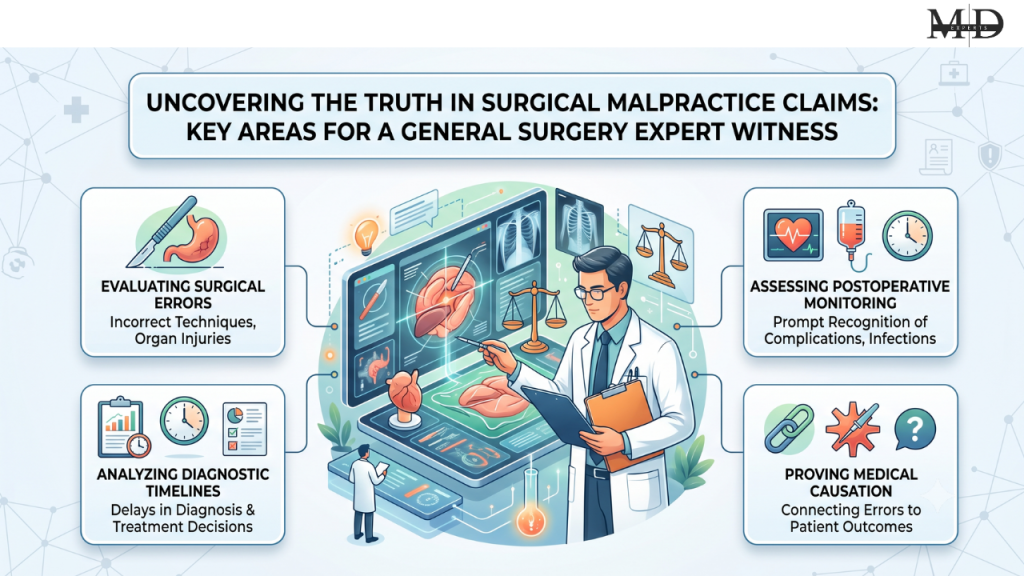
Surgical procedures require specialized medical knowledge, careful clinical judgment, and appropriate patient management. When a patient experiences an unexpected complication or injury, questions may arise about whether the care provided met the accepted standard of care.
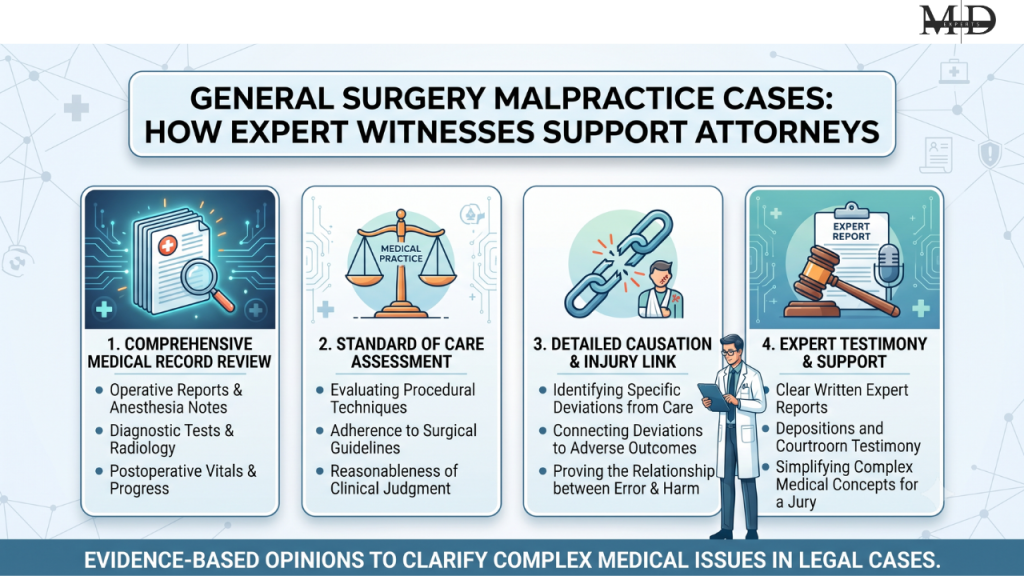
In these situations, a general surgery expert witness can help attorneys understand the medical issues involved in a malpractice claim. By reviewing medical records, evaluating surgical decisions, and explaining relevant clinical findings, an expert can provide valuable insight into the merits of a case.
What Is a General Surgery Expert Witness?
A general surgery expert witness is a qualified physician with relevant surgical training and experience who provides independent medical opinions in legal cases involving surgical care.
A surgical expert witness may review medical records, evaluate the treatment provided, assess whether the standard of care was met, and explain whether an alleged medical error contributed to a patient's injury.
These experts may also assist with case evaluations, written reports, depositions, and courtroom testimony.
When Do You Need a Surgical Expert Witness?
A surgical expert may be needed when a malpractice claim involves questions about surgical decisions, treatment, or patient outcomes.
1. Suspected Surgical Errors
Allegations of surgical errors may involve injury to surrounding organs, blood vessels, or nerves, incorrect surgical techniques, or other complications during a procedure.
A surgery malpractice expert witness can review the operative report and medical records to evaluate whether the procedure was performed appropriately and whether an alleged error contributed to the patient's injury.
2. Delayed Diagnosis or Treatment
Some malpractice claims involve delays in diagnosing or treating conditions that may require surgical intervention.
A general surgery malpractice expert can review the patient's symptoms, diagnostic findings, and treatment timeline to assess whether the clinical response was appropriate under the circumstances.
3. Improper Postoperative Care
Postoperative monitoring and timely intervention are important parts of surgical care. Complications such as infections, internal bleeding, or anastomotic leaks may require prompt recognition and treatment.
A surgical malpractice expert can evaluate whether warning signs were identified and whether appropriate medical care was provided.
4. Informed Consent Disputes
Patients generally should receive appropriate information about a proposed procedure, including relevant risks, benefits, and alternatives.
A general surgeon medical expert may help explain the medical risks and available treatment options when questions arise about informed consent. The applicable legal requirements depend on the jurisdiction.
5. Serious or Permanent Patient Injuries
When a patient experiences lasting complications, requires additional surgery, or suffers significant functional impairment, an expert may help evaluate the medical consequences.
A medical malpractice expert witness can assess the relationship between the alleged departure from the standard of care and the patient's injury.
It is important to remember that an unexpected complication does not automatically establish malpractice. The circumstances and medical evidence must be carefully evaluated.
How Does a General Surgery Expert Help Attorneys?
A qualified general surgeon expert witness can support attorneys throughout different stages of a malpractice case.
- Case evaluation: Reviews the available evidence and identifies important medical questions.
- Medical record review: Examines operative reports, diagnostic findings, and postoperative documentation.
- Standard of care analysis: Evaluates whether the treatment provided was consistent with accepted medical practice.
- Causation assessment: Considers whether an alleged medical error contributed to the patient's injury.
- Expert reports and testimony: Explains medical findings through written opinions, depositions, or courtroom testimony.
The expert's role is to provide an objective, evidence-based medical opinion that helps clarify complex clinical issues.
What Qualifications Should You Look For?
Selecting the right surgical expert requires more than finding a physician with general surgery experience. Attorneys should consider the expert's qualifications in relation to the specific allegations.
Important factors include:
- Relevant surgical training and board certification, where applicable.
- Clinical experience with the procedure or condition involved.
- Familiarity with the standard of care applicable at the time of the event.
- Ability to explain complex medical concepts clearly.
- Objectivity and willingness to provide independent opinions.
- Compliance with applicable jurisdictional requirements for expert testimony.
The expert should have the appropriate knowledge and experience to address the specific medical questions raised in the case.
Find a General Surgery Expert Witness Through MDExperts
Surgical malpractice cases often involve complex medical records, technical procedures, and difficult questions about patient outcomes. Working with a qualified expert can help attorneys better understand the medical evidence and evaluate the issues involved.
MDExperts connects legal professionals with medical experts for case reviews and expert witness services.
Whether you need a general surgery expert witness for an initial case evaluation, medical record review, expert report, or testimony, MDExperts can help you explore the appropriate expertise for your case.
Contact MDExperts to discuss your case and learn more about our medical expert witness services.
References
- American College of Surgeons – Physician Acting as an Expert Witness
Accessed September 28, 2026 - American Medical Association – Medical Testimony
Accessed September 28, 2026 - NCBI Bookshelf – Expert Witness
Accessed September 28, 2026