
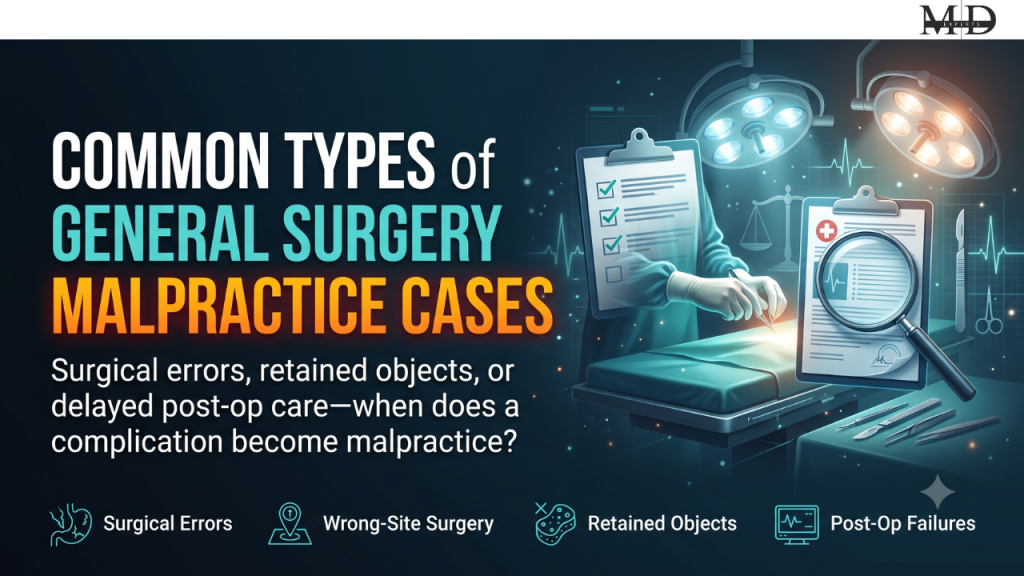
General surgery plays a critical role in diagnosing and treating a wide range of medical conditions, from appendicitis and hernias to gallbladder disease and gastrointestinal disorders. Although surgical procedures are often necessary to improve a patient’s health, mistakes before, during, or after surgery can sometimes lead to serious complications, prolonged recovery, permanent injuries, or even death.
When a surgical outcome is linked to a preventable error or a departure from the accepted standard of care, it may raise concerns about general surgery malpractice. These cases can involve errors in surgical technique, inadequate preoperative evaluation, delayed treatment of complications, or failures in postoperative monitoring.
Understanding the common types of surgical malpractice cases can help clarify the medical issues that may require detailed review by a qualified expert witness.
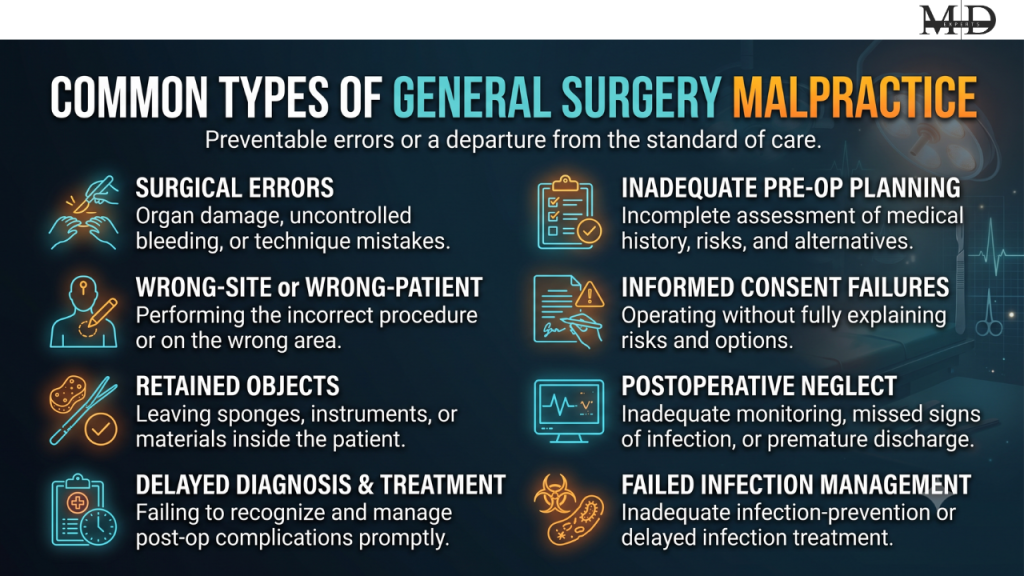
1. Surgical Errors During the Procedure
Surgical errors are among the most recognized issues in medical malpractice surgery cases. General surgeons must carefully evaluate the patient's anatomy, follow appropriate surgical techniques, and respond promptly to unexpected developments during an operation.
Examples of potentially negligent surgical errors include:
- Injury to surrounding organs or structures: Accidental damage to the bowel, blood vessels, bile ducts, or other nearby structures may occur during surgery. The circumstances, surgical approach, and response to the injury are important when evaluating whether the care met the applicable standard.
- Uncontrolled bleeding: Failure to recognize or adequately manage significant bleeding may result in additional procedures, organ damage, or life-threatening complications.
- Improper surgical technique: Inappropriate handling of tissues, incorrect instrument use, or other technical errors may contribute to avoidable patient harm.
- Failure to recognize an intraoperative complication: A surgeon's failure to identify and address a developing complication promptly may worsen the patient's condition.
Not every surgical complication indicates negligence. Evaluating these cases requires an understanding of the procedure, the patient's condition, the risks involved, and the decisions made by the surgical team.
2. Wrong-Site, Wrong-Procedure, or Wrong-Patient Surgery
Wrong-site surgery occurs when a procedure is performed on the wrong body part or side. Other serious errors include performing an unintended procedure or operating on the wrong patient.
These events may involve failures in patient identification, preoperative verification, surgical-site marking, or communication among members of the operating team.
For example, a patient scheduled for surgery on one side of the body may undergo a procedure on the opposite side because the medical records, surgical schedule, and team verification process were not properly reconciled.
Such incidents are recognized patient-safety concerns. The American College of Surgeons recommends safeguards to verify the correct patient, surgical site, and procedure before an operation begins.
In general surgery malpractice investigations, expert review may help establish how the error occurred, whether established safety protocols were followed, and how the event affected the patient's health.
3. Retained Surgical Instruments or Foreign Objects
Surgical instruments, sponges, needles, or other materials may occasionally be unintentionally left inside a patient after an operation. These incidents can cause serious complications, including infection, pain, internal injury, bowel obstruction, or the need for another surgical procedure.
Retained foreign objects are a recognized category of serious surgical safety events. Investigations may examine operating-room counts, documentation, communication among team members, and the procedures used to account for surgical materials.
A retained object may lead to a surgical malpractice case when the available evidence indicates that preventable failures contributed to the incident. A qualified expert can review the operative records and related documentation to assess the clinical circumstances.
4. Delayed Diagnosis or Treatment of Surgical Complications
A surgeon's responsibility does not end when the operation is completed. Timely recognition of complications is essential to reducing the risk of further injury.
Examples of potentially negligent delays include:
- Failure to recognize signs of an anastomotic leak following bowel surgery.
- Delayed diagnosis of internal bleeding or postoperative hemorrhage.
- Failure to investigate symptoms suggesting an infection or abscess.
- Delayed treatment of a bowel obstruction or other serious postoperative condition.
- Failure to respond appropriately to worsening abdominal pain, fever, low blood pressure, or other concerning clinical findings.
These situations may involve general surgery negligence if the evaluation, monitoring, or response fell below the applicable standard of care and caused harm.
An expert review can help determine whether the patient's symptoms warranted additional testing, closer observation, specialist consultation, or urgent intervention.
5. Inadequate Preoperative Assessment and Planning
Appropriate preoperative assessment helps surgeons determine whether an operation is necessary, evaluate the patient's medical condition, identify relevant risks, and plan the safest reasonable approach.
Potential concerns in general surgeon malpractice cases may include:
- Failure to review relevant medical history or diagnostic imaging.
- Inadequate assessment of significant comorbidities or surgical risk factors.
- Failure to consider reasonable alternative treatments.
- Insufficient planning for a patient's known anatomical or medical complexities.
- Failure to address important medication or allergy information.
For example, if a patient's existing medical conditions create specific perioperative risks, those risks may need to be assessed and appropriately managed before surgery.
An unfavorable outcome alone does not establish negligence. The key questions include whether the preoperative evaluation and planning were appropriate under the circumstances and whether any shortcomings contributed to the injury.
6. Inadequate Informed Consent
Before undergoing surgery, patients generally should receive appropriate information about the proposed procedure, its material risks and benefits, reasonable alternatives, and the potential consequences of declining treatment.
Informed-consent concerns may arise when a patient does not receive required information or when the documented consent process does not adequately reflect the discussion that should have taken place.
For example, a patient may undergo an elective procedure without receiving adequate information about a significant material risk or a reasonable alternative that could affect the treatment decision.
The legal and clinical significance of informed-consent issues depends on the circumstances and applicable state law. Expert review may help explain the procedure, its risks, and the relevant clinical alternatives.
7. Postoperative Monitoring and Follow-Up Failures
Postoperative care is an essential part of surgical treatment. Patients may require monitoring for bleeding, infection, blood clots, medication-related complications, or changes in vital signs and clinical status.
Potential failures in postoperative care include:
- Inadequate monitoring of a patient at increased risk of complications.
- Failure to recognize or respond to abnormal vital signs.
- Delayed evaluation of worsening symptoms.
- Inappropriate discharge when continued observation or treatment was indicated.
- Inadequate discharge instructions or follow-up arrangements when clinically necessary.
For example, a patient who develops signs of a serious infection after abdominal surgery may experience a worse outcome if those signs are not recognized and evaluated promptly.
When reviewing these surgical negligence allegations, experts may examine progress notes, nursing documentation, laboratory results, imaging studies, discharge records, and follow-up communications.
8. Surgical Site Infections and Preventable Complications
Infections are recognized risks of surgical procedures. However, some cases raise questions about whether appropriate infection-prevention measures were followed or whether an infection was identified and treated in a timely manner.
Potential issues may include inadequate adherence to relevant infection-prevention protocols, inappropriate wound management, or failure to respond to clinical signs of infection.
A thorough review should consider the patient's underlying health, the type of surgery, the timing of symptoms, microbiology results, and the treatment provided. The presence of an infection alone does not establish that the surgeon or another healthcare professional acted negligently.
9. Failure to Manage Bowel Injuries, Leaks, or Other Abdominal Complications
General surgeons frequently perform procedures involving the stomach, intestines, gallbladder, appendix, and abdominal wall. Complications affecting these structures can become serious if they are not promptly identified and managed.
Examples include an unrecognized bowel injury, leakage at a surgical connection, injury to the bile duct during gallbladder surgery, or an abdominal abscess following an operation.
These cases may require detailed examination of the operative report, postoperative symptoms, diagnostic imaging, laboratory findings, and the timing of subsequent treatment.
An expert witness can help explain whether the complication was a recognized risk, whether the response was appropriate, and whether any alleged departure from the standard of care contributed to the patient's injury.
The Role of a Surgery Malpractice Expert Witness
Evaluating surgical malpractice cases often requires specialized medical knowledge and a careful review of the complete clinical record. A surgery malpractice expert witness can help clarify the medical issues involved and explain whether the care provided was consistent with the applicable professional standard.
Depending on the case, an expert's review may include:
- Reviewing medical records, operative reports, imaging studies, and laboratory results.
- Assessing the appropriateness of preoperative evaluation and surgical planning.
- Evaluating the surgical technique and management of intraoperative complications.
- Examining postoperative monitoring, diagnosis, and treatment decisions.
- Explaining the relationship between the alleged error and the patient's injury.
- Preparing an independent expert opinion and, when appropriate, providing deposition or trial testimony.
The appropriate expert depends on the procedure, the medical issues in dispute, and the qualifications required for the particular matter. A careful, evidence-based review is important because not every complication, unexpected outcome, or disagreement about treatment constitutes malpractice.
Why Experience Matters in General Surgery Malpractice Reviews
General surgery cases can involve complex clinical decisions, multiple healthcare professionals, and rapidly changing patient conditions. Determining whether negligence occurred requires more than identifying an adverse outcome. It involves understanding the clinical circumstances, the applicable standard of care, and the potential connection between the care provided and the resulting harm.
A qualified expert can help attorneys and other professionals interpret complex medical information, identify relevant clinical questions, and evaluate the strengths and limitations of the available evidence.
Contact MDExperts for General Surgery Expert Witness Services
A qualified general surgery expert witness can provide valuable insight into complex surgical malpractice cases by reviewing medical records, evaluating surgical decisions, and assessing whether the care provided met the applicable standard of care.
MDExperts helps connect legal professionals with qualified medical experts who can offer independent opinions and support case evaluations involving surgical errors, complications, and alleged negligence.
To learn more about our general surgery expert witness services, contact MDExperts today.
References
- American College of Surgeons (ACS) – What Is Correct-Site Surgery?
Accessed October 13, 2026 - Agency for Healthcare Research and Quality (AHRQ) – Wrong-Site, Wrong-Procedure, and Wrong-Patient Surgery
Accessed October 13, 2026 - American College of Surgeons – Statement on Principles
Accessed October 13, 2026 - American College of Surgeons – Patient Safety in the Operating Room: Team Care
Accessed October 13, 2026 - The Joint Commission – Right Patient, Right Care
Accessed October 13, 2026 - Agency for Healthcare Research and Quality – Never Events
Accessed October 13, 2026