
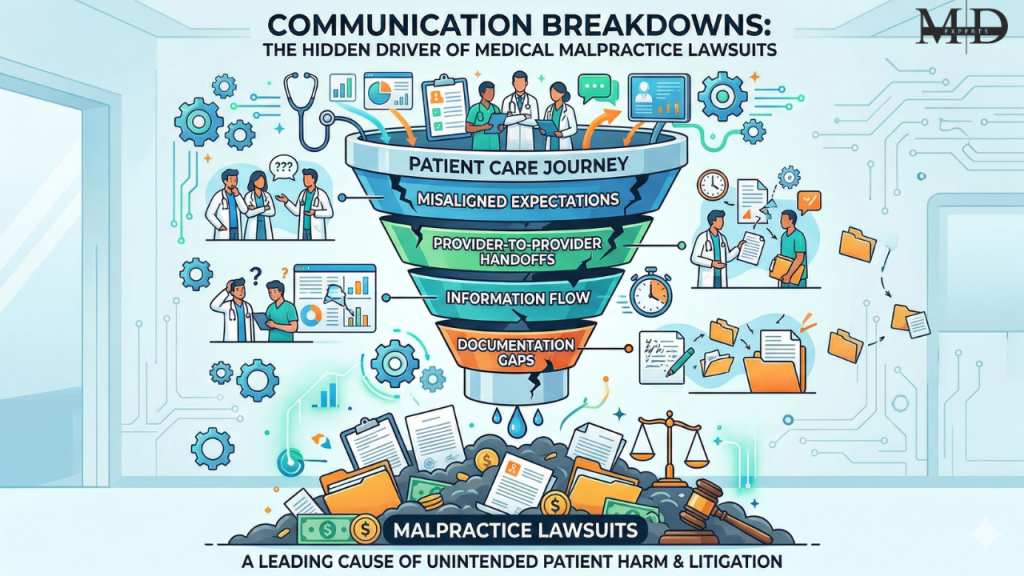
In today’s increasingly complex healthcare environment, advanced technology and clinical expertise are not enough to prevent risk. One factor continues to stand out as a leading driver of litigation: communication breakdowns.
Despite decades of awareness, medical malpractice communication errors remain one of the most persistent and preventable causes of patient harm—and ultimately, lawsuits.
The Scope of the Problem
Research consistently shows that communication failures are not a minor issue—they are central to malpractice risk.
• Nearly one-third of malpractice cases are directly linked to communication failures
• More recent data suggests up to 40% of malpractice cases involve communication breakdown malpractice issues
• In some analyses, communication failures appear in nearly half of all claims
These numbers highlight a critical reality: improving communication is not just about patient experience—it is essential to reducing malpractice lawsuits communication risk.
Why Communication Breakdowns Lead to Lawsuits
At its core, healthcare depends on the accurate, timely exchange of information. When that exchange fails, the consequences can be severe.
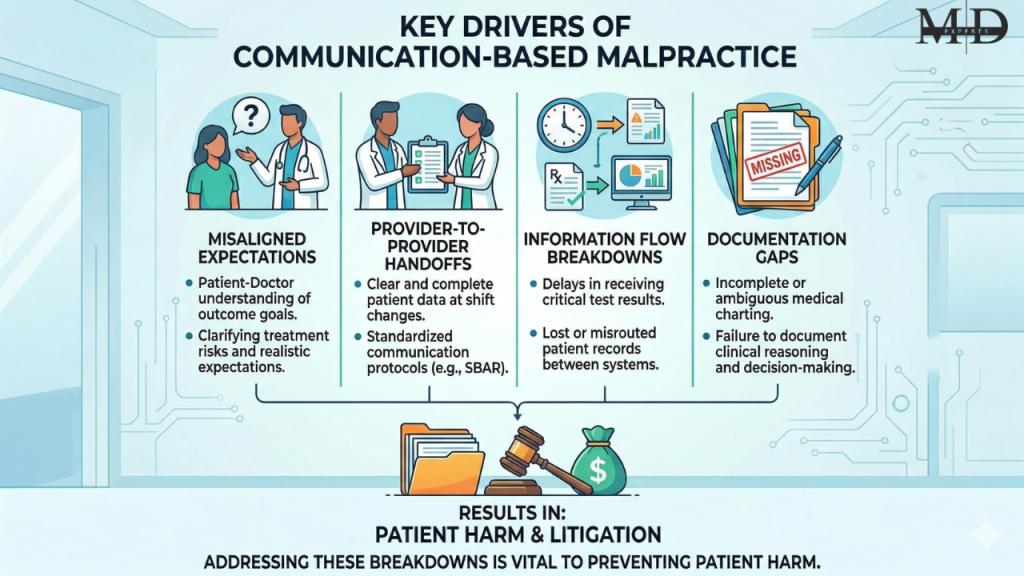
1. Misaligned Expectations with Patients
Poor communication often leaves patients feeling confused, ignored, or misled. Studies show that patients are more likely to pursue legal action when they feel they were not properly informed about their condition or treatment
This directly increases patient communication legal risk, especially when outcomes are unfavorable.
2. Provider-to-Provider Miscommunication
Breakdowns between healthcare professionals—during handoffs, referrals, or care transitions—are equally dangerous.
• Around 40% of communication failures involve handoff issues
• Over half of cases involve provider-to-provider miscommunication
These gaps can lead to missed diagnoses, delayed treatments, and preventable complications.
3. Incomplete or Delayed Information
When critical information is not shared at the right time—or is missing entirely—clinical decision-making suffers.
Whether it’s lab results, imaging findings, or follow-up instructions, even small lapses can escalate into serious errors and communication breakdown malpractice claims.
4. Documentation Gaps
In many cases, the issue is not just what was said—but what was recorded.
Incomplete or unclear documentation can:
• Undermine continuity of care
• Create ambiguity in clinical decisions
• Weaken legal defense in malpractice cases
The Financial and Operational Impact
Communication-related malpractice claims are not only common—they are costly.
• Claims involving communication failures have significantly higher average costs than those without
• Billions of dollars have been paid in malpractice settlements tied to communication errors
Beyond financial losses, these cases also damage:
• Provider reputation
• Patient trust
• Organizational morale
Why the Problem Persists
If communication failures are so well-documented, why do they continue?
Complex Care Environments
Modern healthcare involves multiple providers, specialties, and systems. Each additional touchpoint increases the risk of miscommunication.
Time Pressures
Short consultation times and high patient volumes often lead to rushed or incomplete conversations.
Cultural Barriers
Hierarchy, lack of psychological safety, and poor teamwork can prevent individuals from speaking up or clarifying information.
Technology Gaps
While electronic health records (EHRs) improve access, they can also introduce new risks when information is fragmented or poorly integrated.
Reducing Risk: A Strategic Approach
Addressing medical malpractice communication errors requires more than awareness—it demands structured solutions.
Key strategies include:
• Standardized communication protocols (e.g., SBAR, checklists)
• Clear patient education and informed consent processes
• Robust documentation practices
• Improved handoff systems and care coordination tools
• Training programs focused on communication and teamwork
Organizations that prioritize communication as a core competency—not a soft skill—are better positioned to reduce malpractice lawsuits communication exposure.
How MDExperts Can Help
At MDExperts, we understand that communication failures are at the heart of many malpractice claims.
Our team provides:
• Expert medical case reviews
• Insight into communication-related failures
• Support for legal teams handling complex malpractice cases
Whether you are evaluating a case or strengthening your litigation strategy, we bring clinical clarity to communication breakdown malpractice issues.
Contact MDExperts today to learn how we can support your case.
Final Thoughts
Communication breakdowns are not just operational inefficiencies—they are a primary driver of legal risk in healthcare.
By addressing the root causes of patient communication legal risk, healthcare providers and legal professionals alike can reduce harm, improve outcomes, and minimize exposure to costly litigation.
References
1. National Library of Medicine - Frequency and Nature of Communication Failures in Malpractice Claims
Accessed April 07, 2026
2. National Library of Medicine - Communication Breakdowns and Litigation Risk in Healthcare
Accessed April 07, 2026
3. Academic Medicine (AAMC) - Communication Failures in Medical Mishaps
Accessed April 07, 2026