
Hospital discharge is often seen as the final step in a patient’s care journey—but increasingly, it’s becoming one of the most legally vulnerable moments in clinical practice. For hospitalists, unsafe discharge malpractice is rapidly emerging as a leading source of claims, driven by rising readmissions, system pressures, and gaps in care transitions.
In today’s high-throughput healthcare environment, even a single misstep at discharge can trigger serious patient harm—and significant hospital discharge legal risk.
What Is an Unsafe Discharge?
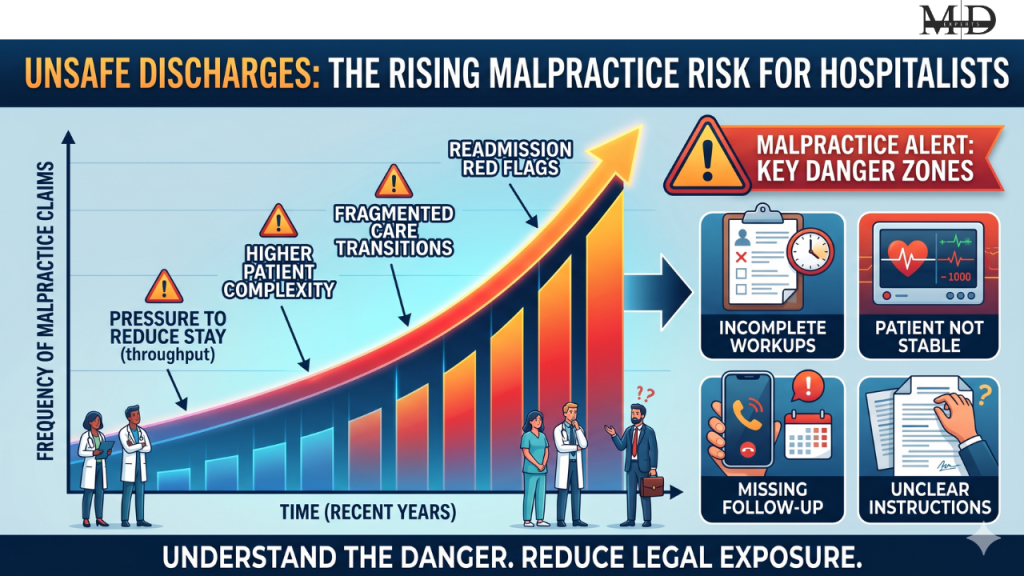
An unsafe discharge occurs when a patient is released from the hospital before it is clinically appropriate or without adequate planning for continued care. This includes situations where:
• The patient is not medically stable
• Diagnostic workups are incomplete
• Follow-up care is not arranged
• Discharge instructions are unclear or insufficient
If a discharge decision places a patient at risk of deterioration, it may constitute premature discharge liability and expose providers to malpractice claims.
Why Unsafe Discharge Malpractice Is Rising
Several systemic factors are fueling the growth of unsafe discharge malpractice:
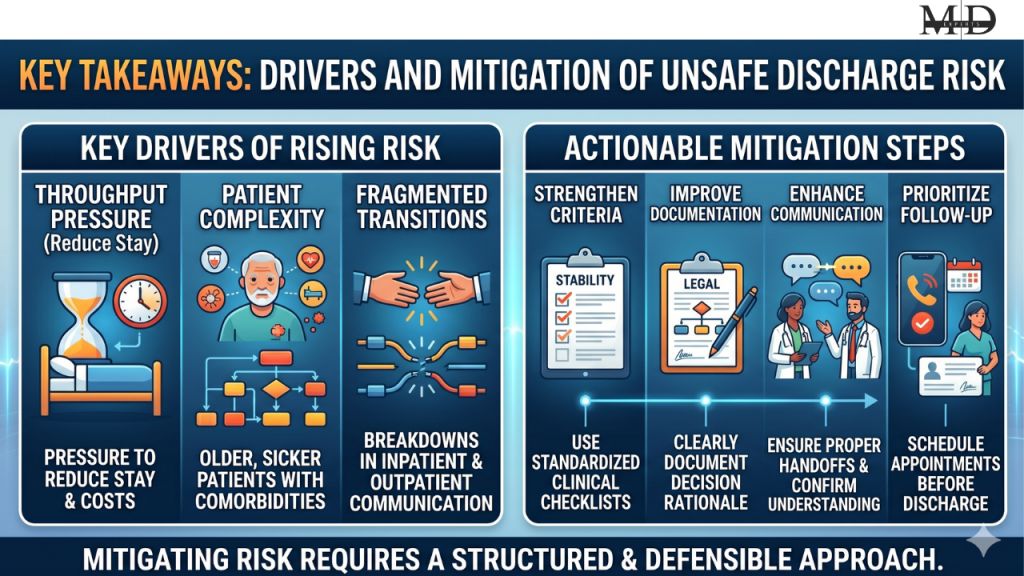
1. Pressure to Reduce Length of Stay
Hospitals face constant pressure to improve throughput and reduce costs. Shorter stays may improve metrics—but they also increase the likelihood of premature discharge liability when clinical readiness is compromised.
2. Increasing Patient Complexity
Hospitalists are managing older, sicker patients with multiple comorbidities. These patients require careful discharge planning, and any oversight can lead to adverse outcomes.
3. Fragmented Care Transitions
Breakdowns in communication between inpatient and outpatient providers remain a major risk factor. Missing follow-ups or unclear instructions are common contributors to readmission related lawsuits.
The Link Between Unsafe Discharges and Readmissions
Readmissions are not just quality metrics—they are often the first red flag in malpractice cases.
• Nearly 20% of patients experience adverse events within weeks of discharge, many of which are preventable
• Patients discharged prematurely or against medical advice have significantly higher odds of 30-day readmission
• Studies show premature discharge is associated with increased mortality and readmission risk
When a patient returns with complications, plaintiff attorneys often scrutinize the discharge process. In many cases, readmission related lawsuits hinge on whether the patient was truly ready to leave the hospital.
Common Triggers for Hospital Discharge Legal Risk
Hospitalists should be particularly cautious of these high-risk scenarios:
• Incomplete treatment or pending test results
• Failure to ensure patient stability prior to discharge
• Inadequate discharge instructions or documentation
• Lack of coordination with caregivers or outpatient providers
• Discharging patients unable to safely care for themselves
Each of these breakdowns can serve as the foundation for an unsafe discharge malpractice claim.
Legal Exposure: From Documentation to Duty of Care
To prove malpractice, plaintiffs must demonstrate:
1. A duty of care existed
2. That duty was breached (e.g., unsafe discharge decision)
3. The breach caused harm
4. Damages resulted
Discharge decisions are particularly vulnerable because they represent a clinical judgment call—one that is heavily scrutinized in hindsight. Even when the hospital itself is not directly negligent, it may still be held liable for provider actions.
How Hospitalists Can Reduce Risk
Mitigating hospital discharge legal risk requires a structured and defensible approach:
Strengthen Discharge Criteria
• Use standardized clinical stability checklists
• Avoid discharging based on administrative pressure alone
Improve Documentation
• Clearly document decision-making rationale
• Record patient condition, instructions, and follow-up plans
Enhance Communication
• Ensure proper handoffs to outpatient providers
• Confirm patient and caregiver understanding
Prioritize Follow-Up Care
• Schedule appointments before discharge
• Address social determinants impacting recovery
Why Expert Review Matters
In litigation involving unsafe discharge malpractice, expert analysis is critical. Determining whether a discharge was appropriate requires deep clinical expertise, careful record review, and an understanding of standard-of-care expectations.
That’s where MDExperts plays a vital role.
Our physician experts help evaluate:
• Whether discharge timing met clinical standards
• If documentation supports decision-making
• The connection between discharge and patient outcomes
We provide objective, defensible opinions that support both plaintiff and defense cases.
Partner with MDExperts
If your case involves premature discharge liability, hospital discharge legal risk, or readmission related lawsuits, our team is here to help.
Visit our contact page to connect with a medical expert: https://www.mdexperts.com/contact
Learn more about our hospitalist experts.
Final Thoughts
Unsafe discharges are no longer isolated incidents—they are a growing malpractice trend with serious clinical and legal implications. For hospitalists, the discharge process must be treated with the same rigor as diagnosis and treatment.
Because in today’s legal landscape, how a patient leaves the hospital can matter just as much as how they were treated inside it.
References
1. Agency for Healthcare Research and Quality (AHRQ) – Readmissions and Adverse Events After Discharge
Accessed April 27, 2026
2. National Library of Medicine – Increased risk of mortality and readmission after premature discharge
Accessed April 27, 2026
3. Forbes – Unsafe hospital discharge explained
Accessed April 27, 2026