
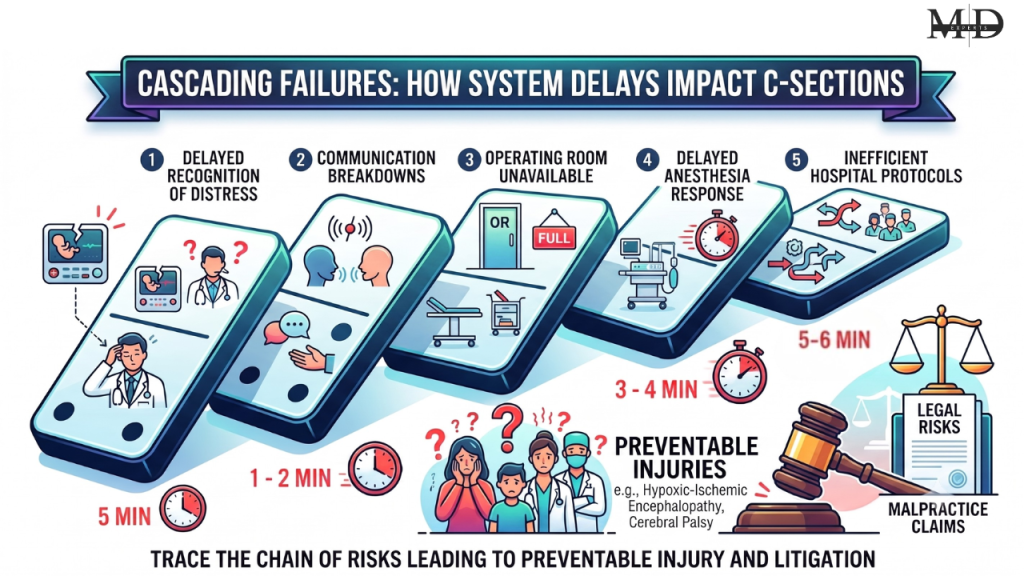
An emergency cesarean section (C-section) can mean the difference between a healthy delivery and a devastating outcome for both mother and baby. While some delays are unavoidable due to complex clinical circumstances, many cases involve preventable system failures rather than poor clinical judgment alone. These failures often become the foundation of malpractice claims when patients experience preventable injuries.
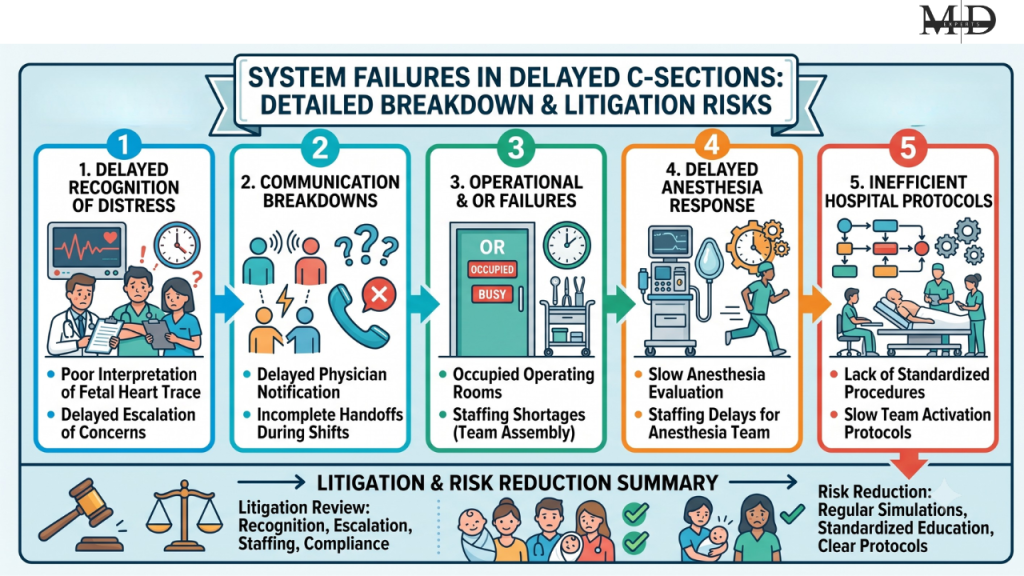
Understanding why delayed C-sections occur—and how healthcare organizations can reduce these risks—is essential for improving patient safety and minimizing legal exposure.
Why Timing Matters in Emergency C-Sections
Emergency C-sections are performed when continuing labor poses a significant risk to the mother or fetus. Common indications include:
- Fetal distress
- Umbilical cord prolapse
- Placental abruption
- Uterine rupture
- Failed labor progression with signs of maternal or fetal compromise
In these situations, every minute matters. Prolonged oxygen deprivation can result in permanent neurological injury, while maternal complications may rapidly become life-threatening.
Healthcare providers are expected to recognize these emergencies promptly and mobilize the necessary resources without unnecessary delay.
Common System Failures That Cause Delayed C-Sections
Many adverse obstetric events are not caused by one individual's mistake. Instead, they result from multiple breakdowns throughout the healthcare system.
1. Delayed Recognition of Fetal Distress
Continuous fetal monitoring is only effective when abnormal findings are recognized and acted upon promptly. Delays in interpreting fetal heart rate tracings or escalating concerns may postpone critical intervention.
Poor communication between nurses, obstetricians, and anesthesia teams frequently contributes to these delays.
2. Communication Breakdowns
Effective communication is one of the strongest predictors of safe obstetric care.
Examples include:
- Delayed notification of the attending physician
- Incomplete handoffs during shift changes
- Miscommunication regarding fetal monitoring findings
- Unclear documentation of clinical decision-making
When communication fails, the time required to initiate an emergency C-section often increases significantly.
3. Operating Room Availability
Hospitals may experience delays because:
- Operating rooms are occupied
- Required equipment is unavailable
- Surgical teams are not immediately assembled
- Staffing shortages limit rapid response
These organizational issues can transform a manageable emergency into a catastrophic outcome.
4. Delayed Anesthesia Response
Even when the obstetric team recognizes an emergency immediately, surgery cannot begin until anesthesia is available.
Delays involving anesthesia evaluation, staffing, or preparation can substantially increase the interval between the decision for surgery and the actual delivery.
5. Inefficient Hospital Protocols
Hospitals without standardized emergency obstetric procedures often experience slower response times.
Well-designed protocols typically include:
- Rapid team activation
- Clearly assigned responsibilities
- Standardized communication pathways
- Simulation training for obstetric emergencies
Organizations that routinely practice emergency drills are generally better prepared when real emergencies occur.
Emergency C-Section Legal Standards
There is a common misconception that every emergency C-section must occur within 30 minutes of the decision to operate. In reality, the emergency C section legal standards are more nuanced.
Professional organizations emphasize that clinical urgency should determine response time rather than adherence to a rigid universal deadline. Certain emergencies—such as uterine rupture or cord prolapse—may require delivery much faster than 30 minutes, while other situations allow additional time for safe preparation.
Courts typically evaluate whether providers acted reasonably under the specific clinical circumstances rather than focusing solely on elapsed minutes.
When Delays Become Medical Negligence
Not every delayed C-section constitutes malpractice.
However, litigation may arise when investigators determine that preventable delays contributed to maternal or neonatal injury.
Examples include:
- Failure to recognize fetal distress
- Delayed physician response
- Failure to escalate care
- Poor documentation
- Staffing deficiencies
- Operating room delays
- Communication failures between care teams
These situations often become the basis for delayed C section malpractice allegations when expert review concludes that earlier intervention could have prevented harm.
Documentation Plays a Critical Role
Medical records frequently become the most important evidence in obstetric litigation.
Accurate documentation should include:
- Time abnormal fetal monitoring began
- Time providers were notified
- Clinical assessments
- Decision-to-incision timeline
- Reason for any delays
- Communication among team members
- Maternal and fetal status throughout labor
Incomplete or inconsistent documentation can significantly complicate the defense of otherwise appropriate clinical care.
Obstetric Surgical Delay Liability
Many obstetric malpractice cases involve questions of obstetric surgical delay liability rather than technical surgical performance.
Expert reviewers often examine:
- Whether warning signs were recognized
- Whether escalation occurred appropriately
- Hospital staffing levels
- Availability of surgical resources
- Compliance with institutional policies
- Communication among multidisciplinary teams
These system-level issues frequently determine whether the standard of care was met.
Why C-Section Delays Lead to Litigation
Families often pursue c section delay litigation when they believe preventable delays resulted in:
- Hypoxic-ischemic encephalopathy (HIE)
- Cerebral palsy
- Permanent neurological injury
- Maternal hemorrhage
- Maternal organ injury
- Stillbirth
- Neonatal death
In these cases, expert medical review is essential to determine whether the outcome resulted from unavoidable clinical circumstances or preventable systems failures.
Reducing Risk Through System Improvement
Healthcare organizations can reduce both patient harm and legal risk by focusing on system-wide improvements, including:
- Regular obstetric emergency simulations
- Standardized fetal monitoring education
- Rapid-response communication protocols
- Clear escalation pathways
- Adequate staffing
- Routine review of decision-to-delivery intervals
- Continuous quality improvement initiatives
Improving these operational processes not only enhances patient safety but also strengthens the defense of care when adverse outcomes occur.
How MDExperts Can Help
At MDExperts, we provide independent medical expert review for obstetric and gynecologic cases involving delayed C-sections and other complex maternal-fetal issues. Our experienced physician experts evaluate medical records, timelines, clinical decision-making, documentation, and adherence to accepted standards of care.
Whether you are investigating potential malpractice, defending a claim, or seeking an objective medical opinion, our experts deliver thorough, evidence-based analyses that support informed legal decision-making.
Contact MDExperts today to learn how experienced medical experts experts can assist with obstetric litigation and expert witness services.
References
1. American College of Obstetricians and Gynecologists (ACOG) – First and Second Stage Labor Management
Accessed July 28, 2026
2. American College of Obstetricians and Gynecologists (ACOG) – Quality Improvement Strategies for Safe Reduction of Primary Cesarean Birth
Accessed July 28, 2026
3. American College of Obstetricians and Gynecologists (ACOG) – Fetal Heart Rate Monitoring During Labor
Accessed July 28, 2026
4. World Health Organization (WHO) – Recommendations: Intrapartum Care for a Positive Childbirth Experience
Accessed July 28, 2026