
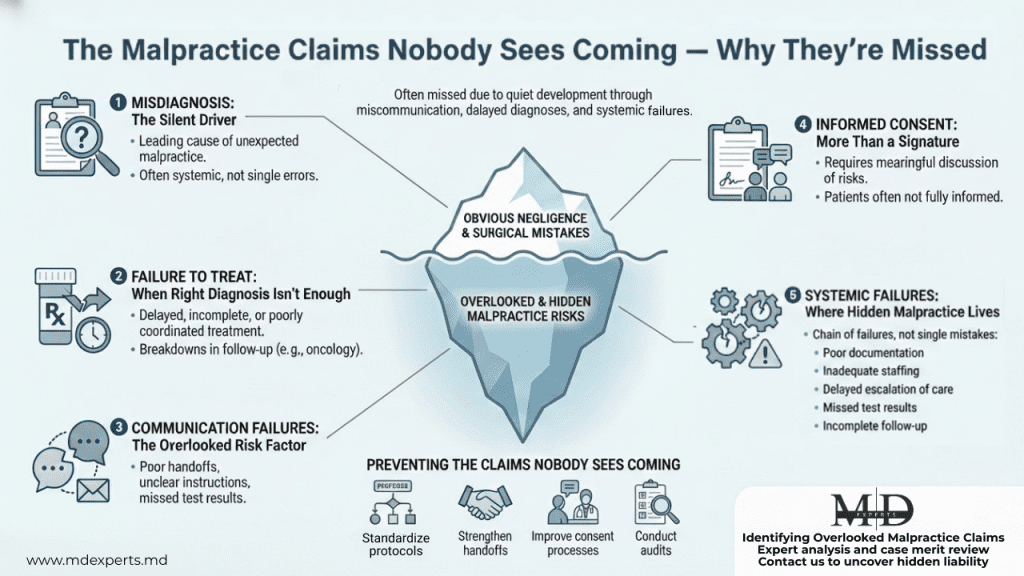
Medical malpractice is often associated with dramatic surgical mistakes or obvious negligence. But many of the most damaging cases are the medical malpractice claims nobody sees coming. These are the overlooked malpractice claims and hidden medical malpractice risks that quietly develop through miscommunication, delayed diagnoses, and systemic failures — and are only recognized after irreversible harm occurs.
Understanding why these claims are missed is essential for stronger medical malpractice prevention, better patient outcomes, and reduced legal exposure.
Misdiagnosis: The Silent Driver of Missed Malpractice Claims
Misdiagnosis, delayed diagnosis, and failure to diagnose remain the leading causes of unexpected medical malpractice. In fast-paced settings like emergency medicine and primary care, subtle symptoms are easily dismissed, test results overlooked, and follow-up delayed.
Stroke, sepsis, cancer, and traumatic brain injury are among the most commonly missed conditions. These missed malpractice claims often stem from systemic neurology and emergency department breakdowns rather than a single physician error.
When the Right Diagnosis Isn’t Enough: Failure to Treat
Even when a diagnosis is correct, malpractice can occur if treatment is delayed, incomplete, or poorly coordinated. This is especially common in oncology and hospital settings, where breakdowns in follow-up lead to devastating outcomes.
In specialties such as radiation oncology, dosage errors, missed imaging, and lack of monitoring represent major hidden medical malpractice risks that frequently go unnoticed until harm has occurred.
Communication Failures: The Overlooked Risk Factor
Communication breakdowns between providers, departments, and patients are one of the most common sources of overlooked malpractice claims. Poor handoffs, unclear discharge instructions, and failure to communicate abnormal test results can transform routine care into a serious malpractice event.
Hospital-based errors and escalation failures are classic examples of systemic hospitalist problems that drive missed malpractice claims.
Informed Consent: More Than a Signature
True informed consent requires meaningful discussion of risks, benefits, and alternatives — not just a signed form. When patients are not fully informed, even technically correct care can become unexpected medical malpractice.
This is a frequent issue in obstetrics, surgery, and anesthesia, where patients later report they were never told about material risks.
Systemic Failures: Where Hidden Malpractice Lives
Many of the most serious medical malpractice claims are not caused by a single mistake, but by a chain of failures:
• Poor documentation
• Inadequate staffing
• Delayed escalation of care
• Missed test results
• Incomplete follow-up
These systemic breakdowns create the perfect conditions for hidden medical malpractice risks to flourish — and for claims to be missed until it is too late.
Preventing the Malpractice Claims Nobody Sees Coming
Effective medical malpractice prevention means looking beyond obvious errors and addressing the systems that allow them to happen:
• Standardize diagnostic and follow-up protocols
• Strengthen communication and handoff procedures
• Improve informed consent processes
• Conduct regular risk audits and case reviews
At MDExperts, we help attorneys and healthcare organizations identify overlooked malpractice claims through expert analysis and case merit review.
Learn how our initial case review for merit can uncover hidden liability and strengthen your case strategy.
Need Help Identifying Hidden or Missed Malpractice Claims?
At MDExperts, our physician experts specialize in uncovering unexpected medical malpractice, evaluating complex cases, and strengthening prevention strategies across high-risk specialties.
Contact us today to learn how we can help.
References
1. HG.org – Common Types of Medical Malpractice
Accessed January 19, 2026
2. Sand Law – Most Common Types of Medical Malpractice
Accessed January 19, 2026
3. InsureGen – Common Legal Pitfalls in Medical Malpractice
Accessed January 19, 2026
4. Physicians Resource Services – Top Medical Malpractice Lawsuits & Prevention
Accessed January 19, 2026