
Even when clinicians appear to provide appropriate care, hidden organizational weaknesses can create conditions that lead to adverse events and legal exposure. Understanding these healthcare system errors liability risks is essential for healthcare organizations, legal professionals, and expert witnesses alike.
Understanding Hidden System Errors in Healthcare
Not all medical errors stem from negligence or poor clinical judgment. Many originate from underlying flaws within healthcare systems. These flaws—often referred to as latent system failures—can remain unnoticed until they combine with human error and result in patient harm.
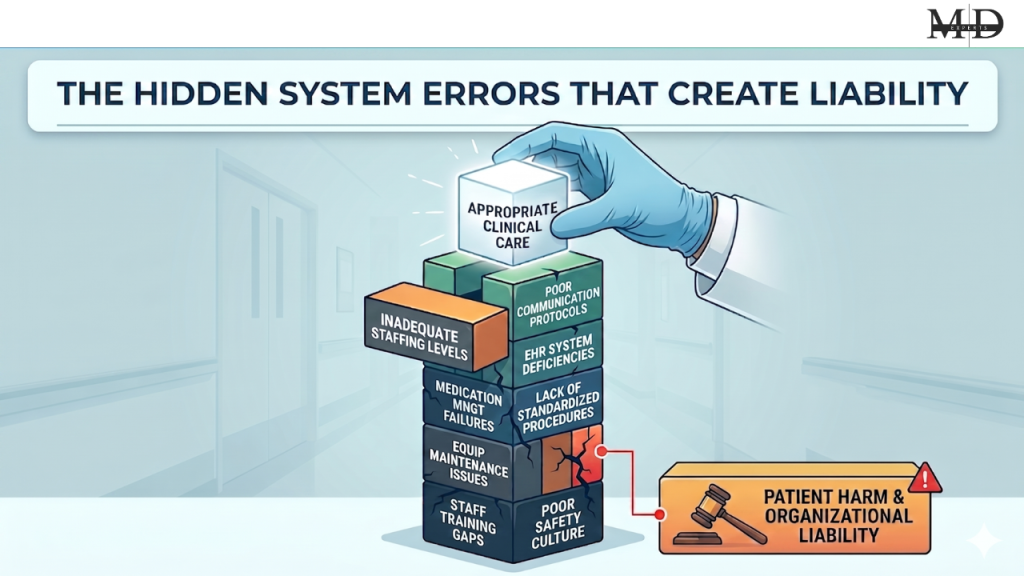
Examples of hidden system errors include:
- Inadequate staffing levels
- Poor communication protocols
- Deficient electronic health record (EHR) systems
- Medication management failures
- Lack of standardized procedures
- Inadequate staff training
- Equipment maintenance issues
- Ineffective handoff processes between providers
These issues may not be visible during routine operations, but they can significantly increase the likelihood of adverse outcomes.
What Are Latent System Failures?
The concept of latent system failures malpractice has gained increasing recognition in patient safety research. Latent failures are organizational weaknesses embedded within healthcare processes, policies, or infrastructure. Unlike active errors, which occur at the point of care, latent failures may exist for months or years before contributing to an incident.
For example:
- A hospital's medication administration software may display look-alike drug names in a confusing manner.
- Chronic understaffing may force clinicians to manage unsafe patient loads.
- Critical laboratory results may not be routed effectively to ordering physicians.
In each case, the healthcare provider may act reasonably, yet the system itself creates conditions that increase the risk of harm.
Research in patient safety consistently demonstrates that many adverse events result from multiple contributing factors rather than a single mistake. As a result, identifying latent system failures malpractice issues has become a critical component of modern case analysis.
How System Errors Lead to Medical Malpractice Claims
Traditionally, medical malpractice litigation focused on whether an individual provider deviated from the standard of care. However, today's healthcare environment often requires a broader examination of organizational practices and operational systems.
Medical malpractice system errors may become central to a case when investigators discover that:
- Policies were inadequate or outdated.
- Staffing shortages compromised patient care.
- Technology systems contributed to delays or mistakes.
- Communication breakdowns prevented timely intervention.
- Safety protocols were not consistently enforced.
When these conditions contribute to patient injury, liability may extend beyond individual practitioners and involve hospitals, healthcare systems, administrators, or other entities responsible for operational oversight.
The Rise of System-Based Malpractice Claims
As healthcare becomes more integrated and technology-driven, system-based malpractice claims are becoming increasingly common.
Plaintiffs' attorneys and healthcare experts now frequently examine:
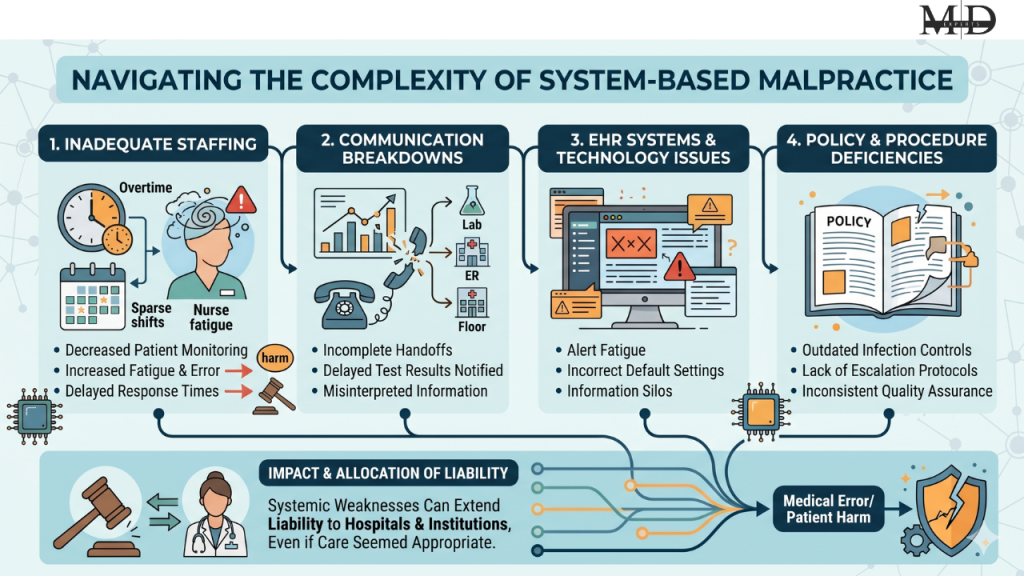
1. Communication Failures
Communication breakdowns remain one of the leading contributors to patient harm. Missed handoffs, incomplete documentation, and delayed test result notifications can all create significant risks.
Even when providers make reasonable clinical decisions, failures in information transfer may lead to delayed diagnoses or treatment.
2. Electronic Health Record (EHR) Issues
While EHR systems are designed to improve patient safety, they can also contribute to errors when poorly implemented or maintained.
Examples include:
- Alert fatigue
- Incorrect default settings
- Documentation errors
- Interface design flaws
- Failure to integrate critical patient information
These medical malpractice system errors may expose healthcare organizations to liability despite appropriate provider actions.
3. Staffing and Resource Constraints
Healthcare facilities facing staffing shortages often struggle to maintain optimal patient care standards.
Insufficient staffing can contribute to:
- Delayed treatment
- Medication errors
- Inadequate patient monitoring
- Increased provider fatigue
When systemic staffing issues contribute to patient harm, they may become a significant factor in healthcare system errors liability assessments.
4. Policy and Procedure Deficiencies
Policies exist to create consistency and reduce risk. When organizations fail to establish, update, or enforce appropriate procedures, preventable incidents can occur.
Examples include:
- Inadequate infection control measures
- Missing escalation protocols
- Lack of emergency response procedures
- Insufficient quality assurance programs
Such deficiencies may strengthen system-based malpractice claims by demonstrating organizational responsibility for the adverse outcome.
Why Expert Analysis Matters
Cases involving healthcare system errors liability often require a deeper level of analysis than traditional malpractice claims.
Medical experts must evaluate:
- Clinical decision-making
- Organizational policies
- Workflow design
- Staffing models
- Technology systems
- Regulatory compliance
- Communication pathways
A thorough review helps determine whether patient harm resulted primarily from provider actions, system failures, or a combination of both.
This distinction can be crucial when establishing causation and allocating responsibility.
The Importance of a Systems-Based Approach
Modern patient safety science recognizes that healthcare operates within highly complex systems. Focusing solely on individual mistakes may overlook the organizational factors that contributed to an event.
A systems-based approach examines:
- Root causes
- Process vulnerabilities
- Human factors engineering
- Organizational culture
- Safety mechanisms
By identifying latent system failures malpractice risks, healthcare organizations can implement meaningful improvements that reduce future harm and potential liability.
How MDExperts Supports Complex Malpractice Evaluations
At MDExperts, we understand that many medical malpractice cases involve more than isolated clinical decisions. Our nationwide network of physician experts helps attorneys, insurers, healthcare organizations, and risk management professionals evaluate both clinical care and the broader system factors that may have influenced an outcome.
Whether a case involves medical malpractice system errors, healthcare system errors liability, latent system failures malpractice concerns, or complex system-based malpractice claims, our experts provide objective, evidence-based insights that support informed decision-making.
At MDExperts, our network includes experienced specialists across emergency medicine, OB/GYN, neurology, orthopedics, surgery, anesthesiology, hospital medicine, family medicine, radiation oncology, and traumatic brain injury review.
Conclusion
Patient harm is not always the result of a single provider's mistake. In many cases, hidden organizational weaknesses, communication breakdowns, technology failures, and process deficiencies contribute to adverse outcomes.
As healthcare delivery becomes increasingly complex, understanding healthcare system errors liability and identifying latent system failures malpractice risks are essential components of modern malpractice analysis. Recognizing these factors not only strengthens legal evaluations but also supports broader efforts to improve patient safety and healthcare quality.
Contact MDExperts
Need assistance evaluating a medical malpractice case involving potential system failures or organizational liability?
Visit our contact page to connect with our team and learn how MDExperts can help identify critical clinical and system-level issues that may impact your case.
References
1.Agency for Healthcare Research and Quality (AHRQ) – Systems Approach to Patient Safety
Accessed June 16, 2026
2. Agency for Healthcare Research and Quality (AHRQ) – Patient Safety 101
Accessed June 16, 2026
3. Agency for Healthcare Research and Quality (AHRQ) – Advances in Patient Safety: From Research to Implementation
Accessed June 16, 2026
4. Agency for Healthcare Research and Quality (AHRQ) – Advances in Patient Safety: New Directions and Alternative Approaches
Accessed June 16, 2026
5. PubMed Central - Development of an Evidence-Based Framework of Factors Contributing to Patient Safety Incidents in Hospital Settings (BMJ Quality & Safety)
Accessed June 16, 2026