
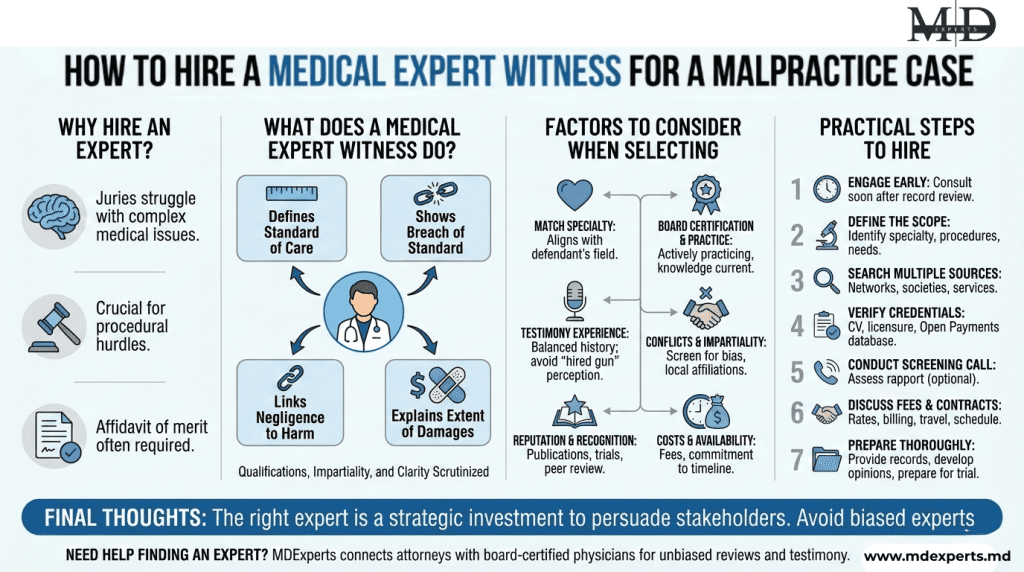
Medical malpractice cases hinge on complex medical issues that juries and judges often struggle to understand, so nearly all jurisdictions require plaintiffs to consult or hire a qualified medical expert early in the process. Some states even require a sworn affidavit of merit from the expert confirming that the defendant likely breached the standard of care. Choosing the right expert witness can clarify technical details, bolster a case’s credibility, and help plaintiffs overcome procedural hurdles.
What Does a Medical Expert Witness Do?
A medical expert witness is typically a licensed healthcare professional—such as a physician, nurse, or specialist—who reviews records, issues written opinions, and testifies in court. Their testimony generally addresses four key areas: defining the applicable standard of care, explaining how the defendant breached that standard, linking the negligence to the patient’s injury, and describing the extent of damages. Because this testimony carries significant weight, the expert’s qualifications, impartiality, and communication skills are closely scrutinized by both sides.
Factors to Consider When Selecting an Expert
Match the specialty:
The expert’s specialty should align closely with the medical issues in the case. Courts often require experts to practice in the same or a similar specialty as the defendant.
Board certification and current practice:
The expert should be board certified and actively practicing in the relevant field. ChartSwap’s guide to selecting an expert witness explains that board certification signifies a physician has exceeded minimum standards and keeps medical knowledge current.
Testimony experience:
Experience testifying can be an asset, but it can also invite attacks from opposing counsel who may portray frequent witnesses as “hired guns.” ChartSwap observes that while many attorneys value seasoned witnesses, others prefer experts with limited testimonial histories to avoid this perception.
Conflicts and impartiality:
Attorneys should conduct conflict screenings before retaining an expert. ChartSwap warns that experts practicing in the same city or affiliated with the defendant’s institution may face conflicts, and that retaining an out-of-state expert can help mitigate potential bias.
Reputation and peer recognition:
According to Best Lawyers, indicators of a strong medical expert witness include board certification, involvement in clinical trials, publications in peer-reviewed medical journals, presentations at professional meetings, and service on formulary or peer review committees.
Costs and availability:
Expert witness fees can be substantial. The Expert Institute notes that record review fees often range from $300 to $750 per hour, with additional flat fees for affidavits and potential rush charges. Highly specialized physicians may also have limited availability, making it essential to confirm the expert can meet the case timeline.
Practical Steps to Hire the Right Expert
1. Engage early:
Begin consulting experts soon after reviewing medical records. Many jurisdictions require an expert’s affidavit or certificate of merit before a lawsuit can be filed, making early expert involvement critical.
2. Define the scope:
Clearly identify the medical specialty, specific procedures, or diagnoses involved, and determine whether the expert’s role will include record review, deposition testimony, or in-court testimony.
3. Search multiple sources:
Use professional networks, specialty societies, academic medical centers, and vetted expert witness services to compile a diverse list of qualified candidates.
4. Verify credentials:
Obtain the expert’s curriculum vitae and confirm board certification, licensure status, publications, and any disciplinary history. The Centers for Medicare & Medicaid Services’ Open Payments database can also reveal financial relationships that may raise potential bias concerns.
5. Conduct a screening call:
Decide whether to interview the candidate before retention. ChartSwap notes that some attorneys prefer a brief call to assess communication style and rapport, while others avoid pre-retention discussions to prevent influencing the expert’s independent opinion.
6. Discuss fees and contracts:
Negotiate hourly rates for record review, report preparation, depositions, and trial testimony. Be sure to clarify billing practices, travel expenses, cancellation policies, and payment schedules in advance.
7. Prepare thoroughly:
Once retained, provide comprehensive medical records, timelines, pleadings, and key exhibits. Work closely with the expert to develop clear opinions and prepare them thoroughly for deposition and trial testimony.
Final Thoughts and Next Steps
Selecting the right medical expert witness is a strategic investment. An expert who aligns with the case’s specialty, possesses strong credentials and communicates clearly can persuade insurers to settle or jurors to side with your client. Conversely, an ill suited or biased expert can undermine credibility and jeopardise a claim. By following the steps above, attorneys can identify and retain experts who will withstand scrutiny and clarify complex medical issues for the court.
Need Help Finding an Expert?
At MDExperts, we specialise in connecting attorneys with board certified, actively practising physicians across a wide range of specialties. Our experts provide unbiased reviews, affidavits of merit and persuasive testimony to support your case. If you’re evaluating a potential malpractice claim, schedule an initial case review or contact us. We’ll help you identify the right medical expert witness so you can build a strong, persuasive case.
References
1. Expert Witnesses in Medical Malpractice Lawsuits – Justia
2. How to Select a Medical Expert Witness – ChartSwap
3. What Makes a Strong Medical Expert Witness – Best Lawyers
4. Cost of a Certificate or Affidavit of Merit – Expert Institute