
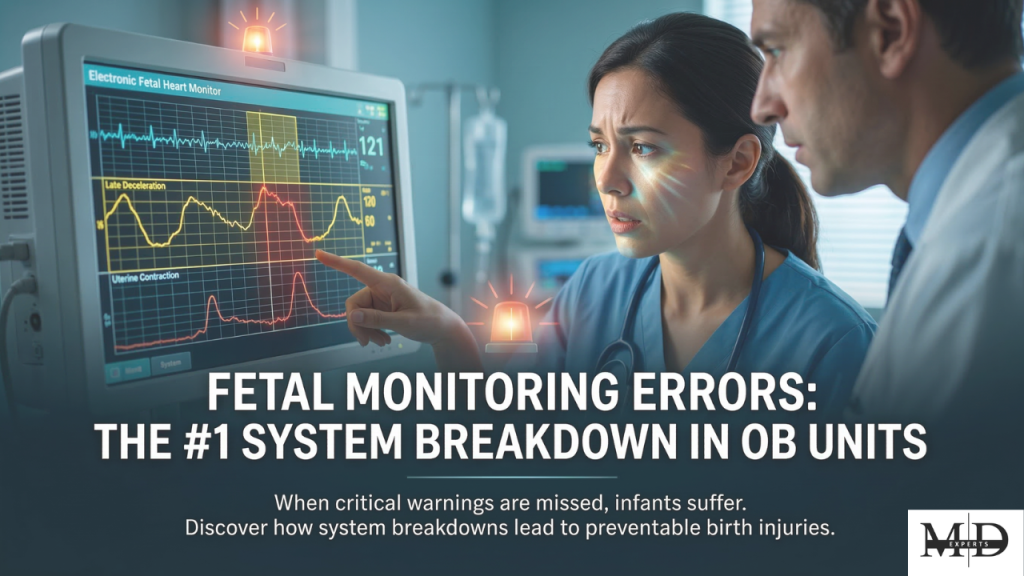
In modern obstetrics, few technologies are as widely used—and as frequently scrutinized—as Electronic Fetal Monitoring (EFM). Designed to track fetal heart rate and uterine contractions during labor, EFM plays a critical role in identifying fetal distress and preventing birth injuries. Yet despite its importance, fetal monitoring errors malpractice claims remain among the most common allegations in obstetric litigation.
For hospitals and legal teams reviewing birth injury cases, fetal monitoring failures often reveal a deeper issue: system breakdowns in labor and delivery units. Misinterpretation of fetal heart tracings, delayed responses to abnormal patterns, and communication failures between clinicians can all lead to preventable harm.
This blog explores why fetal monitoring errors occur, how they drive litigation, and how expert review from organizations like MDExperts can help clarify standards of care.
The Role of Electronic Fetal Monitoring in Modern Obstetrics
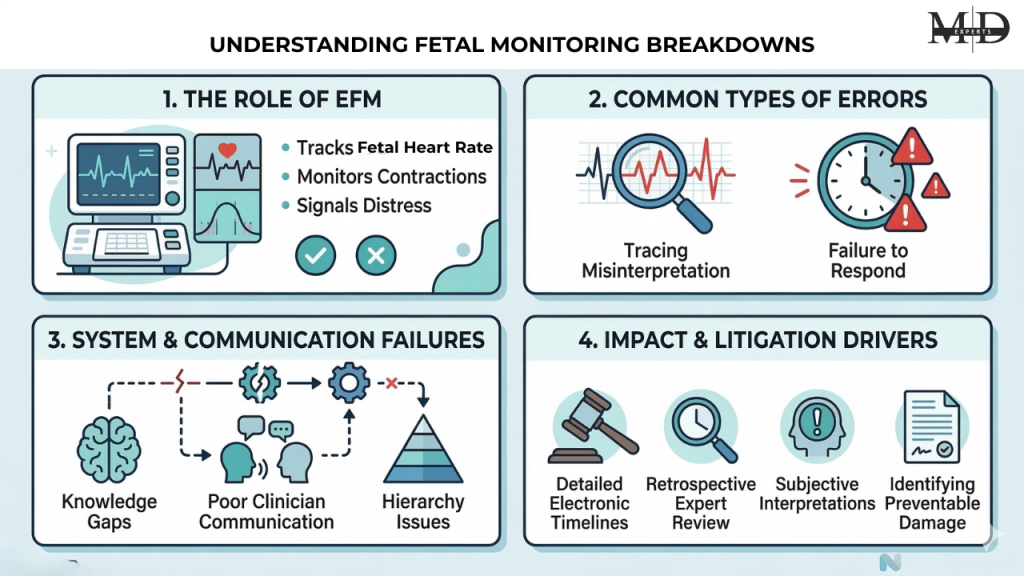
Electronic Fetal Monitoring (EFM) evaluates fetal heart rate patterns and uterine contractions to assess whether a fetus is receiving adequate oxygen during labor. The technology has become standard practice in many hospitals, especially for high-risk pregnancies.
In fact, the majority of births in developed healthcare systems involve some form of electronic fetal monitoring.
Clinicians analyze fetal heart tracings for patterns such as:
• Baseline heart rate
• Variability
• Accelerations
• Decelerations
When interpreted correctly, these patterns can signal early fetal distress and prompt timely interventions, including oxygen administration, maternal repositioning, or emergency cesarean delivery.
However, interpreting these patterns requires training, vigilance, and coordination among the entire OB care team.
Why Fetal Monitoring Errors Are So Common
Despite widespread use, electronic fetal monitoring litigation continues to rise because interpretation is inherently complex and sometimes subjective.
Research and case reviews show that fetal monitoring failures typically fall into several categories:
1. Misinterpretation of Fetal Heart Tracings
One of the most frequent sources of EFM misinterpretation liability is incorrectly reading fetal heart rate patterns.
For example:
• Late decelerations may signal reduced oxygen supply
• Decreased variability can indicate fetal compromise
• Persistent abnormal patterns may require urgent intervention
Failure to recognize these warning signs—or misclassifying abnormal tracings as “reassuring”—can delay life-saving treatment.
These errors are central to many fetal heart tracing negligence claims.
2. Failure to Respond to Non-Reassuring Patterns
Even when abnormal tracings are recognized, delays in intervention can create liability.
Common failures include:
• Delayed escalation to an obstetrician
• Delayed cesarean section decision
• Failure to implement intrauterine resuscitation
Studies of malpractice claims show that ignoring EFM warnings or failing to act quickly after detection of fetal distress is a major contributor to adverse birth outcomes.
3. System and Communication Failures
Many fetal monitoring errors are not the result of a single clinician mistake but rather system breakdowns within the OB unit.
Case reviews of intrapartum monitoring errors identify several recurring system issues:
• Knowledge gaps among staff
• Poor communication between nurses and physicians
• Lack of standardized interpretation protocols
• Failure to escalate concerns due to hierarchy or conflict avoidance
When these systemic failures occur simultaneously, they dramatically increase the risk of fetal injury.
Why EFM Is a Major Driver of Obstetric Malpractice
Obstetrics consistently ranks among the most litigated medical specialties, and fetal monitoring is a central factor.
Studies of malpractice data indicate that fetal surveillance and monitoring issues account for a significant proportion of obstetric lawsuits.
Earlier analyses of malpractice claims also found that a large share of obstetric cases involve electronic fetal monitoring or documentation related to it.
Several factors make EFM particularly important in litigation:
• Continuous electronic records provide detailed timelines
• Tracings can be retrospectively reviewed by experts
• Interpretation often varies among clinicians
• Delayed interventions are easier to identify in hindsight
As a result, electronic fetal monitoring litigation often hinges on expert interpretation of fetal heart tracings and the clinical decisions made during labor.
The Importance of Expert Analysis in Fetal Monitoring Cases
Fetal monitoring cases frequently involve highly technical clinical questions, such as:
• Were abnormal fetal heart rate patterns present?
• Should the care team have intervened earlier?
• Did delays contribute to hypoxic injury or neurological damage?
• Did the clinical response meet the accepted standard of care?
Answering these questions requires specialized obstetrics expertise and careful review of medical records, fetal monitoring strips, and delivery timelines.
This is where independent expert review becomes essential.
How MDExperts Supports Fetal Monitoring Litigation
At MDExperts, our network includes board-certified obstetricians and maternal-fetal medicine specialists with extensive experience reviewing complex birth injury cases.
Our experts assist legal teams by:
• Reviewing fetal monitoring strips and labor timelines
• Assessing potential fetal monitoring errors malpractice issues
• Evaluating EFM misinterpretation liability claims
• Determining whether fetal heart tracing negligence contributed to injury
• Providing objective expert reports and testimony in electronic fetal monitoring litigation
Because fetal monitoring cases often involve nuanced interpretation and system-level issues, expert insight can be critical in clarifying what occurred during labor and delivery.
Preventing Future Monitoring Errors
Hospitals and obstetric departments can reduce the risk of fetal monitoring failures by focusing on:
• Standardized fetal heart tracing interpretation training
• Team-based communication protocols
• Rapid escalation pathways for abnormal tracings
• Central monitoring systems with alert capabilities
Many monitoring failures are preventable when healthcare systems emphasize team communication, education, and consistent protocols.
Conclusion
Fetal monitoring is one of the most powerful tools available to obstetric clinicians—but it is also one of the most misunderstood and litigated aspects of childbirth care.
Errors involving fetal heart tracing interpretation, delayed intervention, or system breakdowns can have devastating consequences for newborns and families. As a result, fetal monitoring errors malpractice claims remain a major driver of obstetric litigation.
Expert medical review is essential to determining whether clinical decisions met the accepted standard of care. Organizations like MDExperts provide the specialized insight necessary to analyze fetal monitoring records and clarify complex issues in electronic fetal monitoring litigation.
If you are handling a birth injury case involving fetal monitoring issues, contact MDExperts today to connect with experienced obstetrics experts.
Visit our contact page to discuss your case and obtain expert support.
References
1. National Center for Biotechnology Information (NCBI) – Electronic Fetal Monitoring, Cerebral Palsy, and Medical Malpractice
Accessed March 12, 2026
2. Cambridge University Press – Electronic Fetal Monitoring and Obstetrical Malpractice
Accessed March 12, 2026
3. PubMed – System Errors in Intrapartum Electronic Fetal Monitoring
Accessed March 12, 2026
4. PubMed – Problems in Fetal Monitoring Characteristic of Risks for Malpractice Suits
Accessed March 12, 2026