
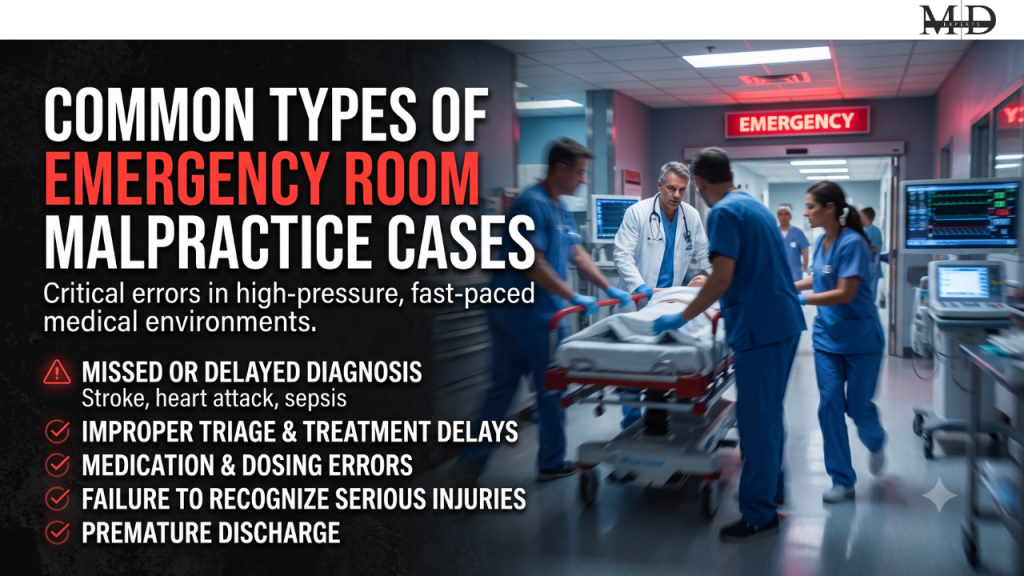
Emergency rooms are fast-paced medical environments where healthcare professionals must make critical decisions under pressure. Patients often arrive with severe injuries, sudden illnesses, or symptoms that require immediate evaluation. Although emergency medicine teams work to provide timely and appropriate care, errors in diagnosis, treatment, communication, or patient monitoring can sometimes result in serious harm.
Emergency room malpractice may arise when a healthcare professional fails to meet the applicable standard of care and that failure causes injury to a patient. Not every unfavorable outcome or diagnostic error constitutes malpractice. Each case requires a careful review of the medical records, clinical circumstances, and applicable standards of care.
Understanding common types of emergency department malpractice cases can help attorneys identify the medical issues involved and determine when specialized clinical expertise may be necessary.
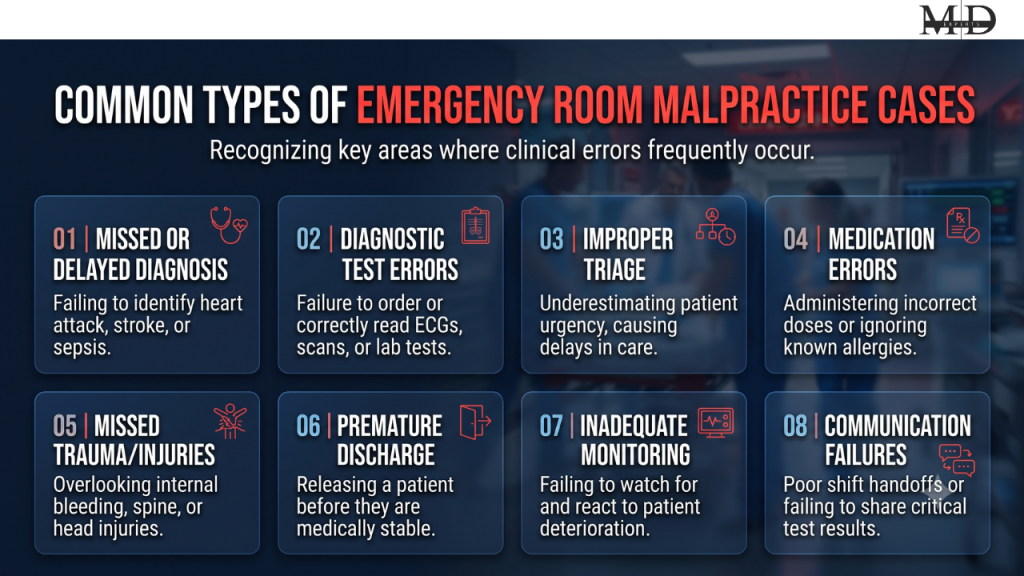
1. Missed or Delayed Diagnosis
Missed or delayed diagnosis is one of the most significant concerns in emergency medicine. Emergency physicians must evaluate symptoms quickly, identify potentially life-threatening conditions, and determine whether additional testing or specialist consultation is necessary.
Conditions that may be overlooked or misdiagnosed include:
- Heart attacks: Chest discomfort, shortness of breath, nausea, or unusual fatigue may require careful cardiac evaluation, even when symptoms are atypical.
- Strokes: Sudden dizziness, weakness, speech difficulties, or changes in coordination may indicate a neurological emergency.
- Sepsis: Delayed recognition of a severe infection can postpone time-sensitive treatment.
- Pulmonary embolism: Failure to appropriately evaluate symptoms such as unexplained shortness of breath or chest pain may delay diagnosis.
- Internal bleeding or aortic emergencies: Failure to recognize warning signs can lead to dangerous treatment delays.
A systematic review commissioned by the Agency for Healthcare Research and Quality identified several serious conditions associated with emergency department diagnostic errors, including stroke, myocardial infarction, aortic emergencies, and blood clots..
An emergency medicine expert witness can review the presenting symptoms, differential diagnosis, diagnostic testing, and clinical decision-making to assess whether the care provided met the applicable standard. An ER expert witness may also evaluate whether the patient's condition warranted further investigation, observation, admission, or specialist consultation.
2. Failure to Order or Interpret Diagnostic Tests Properly
Laboratory tests, electrocardiograms (ECGs), imaging studies, and other diagnostic tools can be essential to emergency care. However, malpractice allegations may arise when appropriate tests are not ordered, results are misinterpreted, or abnormal findings are not acted upon.
Examples include:
- Failing to obtain an ECG when cardiac symptoms warrant evaluation.
- Overlooking a fracture or other significant injury on an imaging study.
- Misinterpreting CT scan findings associated with a neurological emergency.
- Failing to follow up on critical laboratory results.
- Discharging a patient despite unresolved findings that require additional evaluation.
A published study examining closed malpractice claims involving missed or delayed emergency department diagnoses identified failures in test ordering and interpretation among the contributing factors.
An emergency department expert witness can assess whether the diagnostic workup was appropriate given the patient's symptoms, examination findings, and clinical risk factors. Depending on the case, additional expertise in radiology, cardiology, neurology, or another relevant specialty may also be necessary.
3. Improper Triage and Delayed Treatment
Triage determines the urgency with which patients should receive evaluation and treatment. Emergency departments must prioritize patients according to the severity of their conditions, rather than simply the order in which they arrive.
Potential concerns include:
- Assigning an insufficient level of urgency to a patient with serious symptoms.
- Failing to recognize signs of respiratory distress, stroke, or circulatory instability.
- Delaying treatment for a rapidly deteriorating patient.
- Failing to reassess patients whose conditions worsen while waiting.
- Inadequate communication between triage staff and treating clinicians.
An emergency room malpractice case involving triage may require an examination of the initial assessment, recorded vital signs, waiting times, changes in symptoms, and the department's response to those changes.
An emergency room malpractice expert can help determine whether the triage assessment and subsequent care were consistent with the applicable clinical standards. The review may also consider staffing, workflow, and communication issues when relevant to the allegations.
4. Medication Errors and Improper Treatment
Medication-related errors can occur during prescribing, preparation, administration, or monitoring. In an emergency department, where treatment decisions are often made quickly, accurate documentation and appropriate safety checks are particularly important.
Examples of potential medication-related malpractice include:
- Administering an incorrect medication or dose.
- Failing to account for a documented allergy.
- Overlooking a clinically significant drug interaction.
- Using an inappropriate treatment despite relevant contraindications.
- Failing to monitor a patient for a serious adverse reaction.
- Delaying necessary treatment because of an avoidable medication error.
Not every medication complication constitutes malpractice. The clinical circumstances, patient's condition, available information, and applicable treatment standards must be considered.
An emergency medicine malpractice expert can evaluate whether the medication selection, dosage, administration, and monitoring were appropriate. A qualified medical malpractice expert witness may also help explain how an alleged treatment error relates to the patient's injury and whether alternative actions would have been consistent with the standard of care.
5. Failure to Recognize and Treat Serious Injuries
Emergency departments regularly treat patients involved in vehicle collisions, falls, workplace accidents, and other traumatic events. Some injuries may initially appear minor but can develop into serious or life-threatening conditions.
Potential allegations include:
- Failure to recognize a traumatic brain injury or intracranial bleeding.
- Missing a fracture or spinal injury.
- Failing to identify internal bleeding.
- Inadequate evaluation of a patient following significant trauma.
- Discharging a patient without appropriate assessment, treatment, or follow-up instructions.
A review of emergency department diagnostic errors has identified missed fractures among commonly reported diagnostic problems, while more serious injuries may carry a greater risk of lasting harm.
An ER malpractice expert witness can evaluate the physical examination, imaging, neurological assessments, treatment decisions, and discharge plan. The expert's role is to assess the clinical issues objectively, not to assume that an adverse outcome automatically establishes negligence.
6. Premature Discharge or Inadequate Discharge Instructions
Discharging a patient requires a reasonable clinical assessment of the patient's condition, the need for further treatment or observation, and the safety of continuing care outside the hospital.
Potential concerns include:
- Discharging a patient before adequately evaluating concerning symptoms.
- Failing to reassess persistent or worsening symptoms.
- Not providing appropriate return precautions.
- Failing to explain medication instructions or necessary follow-up.
- Inadequately communicating pending test results or unresolved diagnostic concerns.
A patient's condition may deteriorate after discharge, but deterioration alone does not establish malpractice. The central question is whether the discharge decision was reasonable based on the information available at the time.
An emergency room medical expert can review the clinical documentation, diagnostic findings, discharge criteria, and follow-up instructions. An expert may also assess whether the patient received appropriate guidance about symptoms requiring an immediate return to the emergency department.
7. Inadequate Monitoring and Failure to Respond to Deterioration
Some emergency patients require repeated examinations, vital-sign monitoring, observation, or prompt intervention as their conditions evolve. A failure to recognize deterioration can lead to delayed treatment and potentially preventable harm.
Examples include:
- Failing to respond appropriately to worsening vital signs.
- Inadequate monitoring after medication administration or a procedure.
- Delayed recognition of respiratory failure or shock.
- Failing to reassess a patient whose symptoms have changed.
- Inadequate escalation of care when a patient's condition becomes unstable.
An emergency department malpractice review may examine monitoring records, nursing notes, physician assessments, alarm responses, and the timing of interventions.
An emergency department expert witness with relevant clinical experience can help assess whether the monitoring and response were appropriate under the circumstances. The review may also identify communication or handoff issues that contributed to delays.
8. Communication Failures and Inadequate Handoffs
Emergency care frequently involves multiple healthcare professionals, including physicians, nurses, radiologists, consultants, and receiving inpatient teams. Accurate communication is essential to ensure that important clinical information is not lost during transitions in care.
Potential problems include:
- Failing to communicate critical test results.
- Incomplete handoffs between clinicians or shifts.
- Not documenting important changes in a patient's condition.
- Failing to obtain or communicate necessary specialist recommendations.
- Inadequate communication about pending tests, treatment plans, or follow-up needs.
These issues may contribute to missed diagnoses, delayed interventions, or inappropriate discharge decisions. A thorough review should consider the responsibilities of each provider and the systems in place at the time.
An emergency medicine expert witness can assess the clinical significance of communication failures and whether they affected the patient's care. Where appropriate, a separate specialist may be needed to address issues outside the expert's qualifications.
The Role of an Emergency Medicine Expert Witness in Malpractice Cases
Emergency room malpractice claims often involve complex clinical decisions made under significant time constraints. Medical expert review can help clarify what information was available to the treating team, what actions were reasonable under the circumstances, and whether an alleged deviation from the standard of care contributed to the patient's injury.
Depending on the case and applicable jurisdiction, an expert may assist with:
- Reviewing emergency department records, laboratory results, imaging reports, and treatment documentation.
- Evaluating the clinical decision-making process.
- Assessing whether diagnostic testing, treatment, monitoring, and discharge decisions were appropriate.
- Identifying potential gaps in communication or continuity of care.
- Explaining complex medical issues in clear, understandable language.
- Providing an independent opinion within the expert's area of training and experience.
An ER expert witness or emergency medicine malpractice expert should have relevant qualifications and experience that match the issues in dispute. The expert's opinions should be grounded in the medical evidence, applicable standards, and the facts of the individual case.
How MDExperts Supports Emergency Room Malpractice Case Reviews
Selecting the right medical expert is an important step in evaluating an emergency room malpractice claim. Attorneys may need an expert who understands emergency department workflows, time-sensitive diagnostic decisions, acute treatment, and the clinical challenges associated with undifferentiated symptoms.
MDExperts connects legal professionals with medical experts for case review and other medico-legal needs. When an emergency room malpractice case involves allegations of a missed diagnosis, delayed treatment, medication error, inadequate monitoring, or premature discharge, identifying an appropriately qualified expert can help attorneys evaluate the relevant medical issues.
Whether a case requires an emergency room medical expert, an emergency department expert witness, or a specialist with expertise in a particular condition, the expert's qualifications should align with the clinical questions and the requirements of the jurisdiction.
To discuss expert witness needs for an emergency department malpractice matter, visit the MDExperts Contact Page to inquire about available medical expertise and case support.
Conclusion
Emergency room malpractice cases can involve missed diagnoses, delayed treatment, medication errors, inadequate monitoring, improper triage, and failures in communication or discharge planning. Because emergency medicine involves rapidly changing conditions and complex decisions, each allegation must be evaluated in the context of the patient's presentation and the information available to the healthcare team.
A qualified medical expert can help clarify the applicable clinical standards, evaluate the medical evidence, and provide an objective assessment of the issues in dispute. For attorneys handling emergency department malpractice matters, MDExperts offers a starting point for exploring medical expert witness support tailored to the needs of a case.
References
1. Agency for Healthcare Research and Quality (AHRQ) — Diagnostic Errors in the Emergency Department: A Systematic Review
Accessed October 10, 2026
2. Kachalia et al., Annals of Emergency Medicine — Missed and Delayed Diagnoses in the Emergency Department: A Study of Closed Malpractice Claims From 4 Liability Insurers
Accessed October 10, 2026
3. AHRQ Patient Safety Network — Diagnostic Errors
Accessed October 10, 2026
4. Agency for Healthcare Research and Quality — Medical Errors
Accessed October 10, 2026