
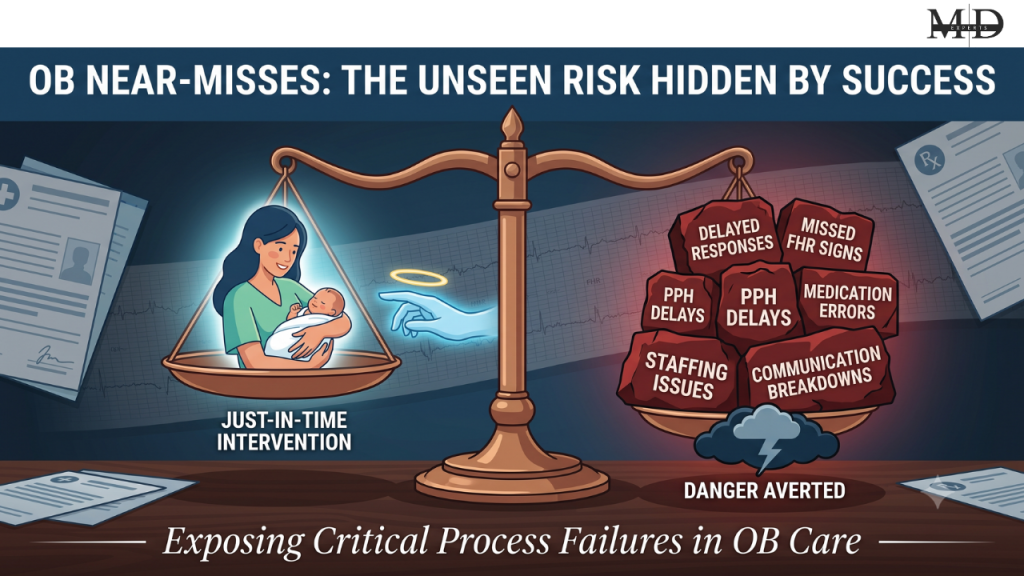
In obstetrics, a patient can experience a serious medical event without suffering permanent harm. A delayed intervention, communication breakdown, medication error, or missed warning sign may be corrected before it results in catastrophic injury.
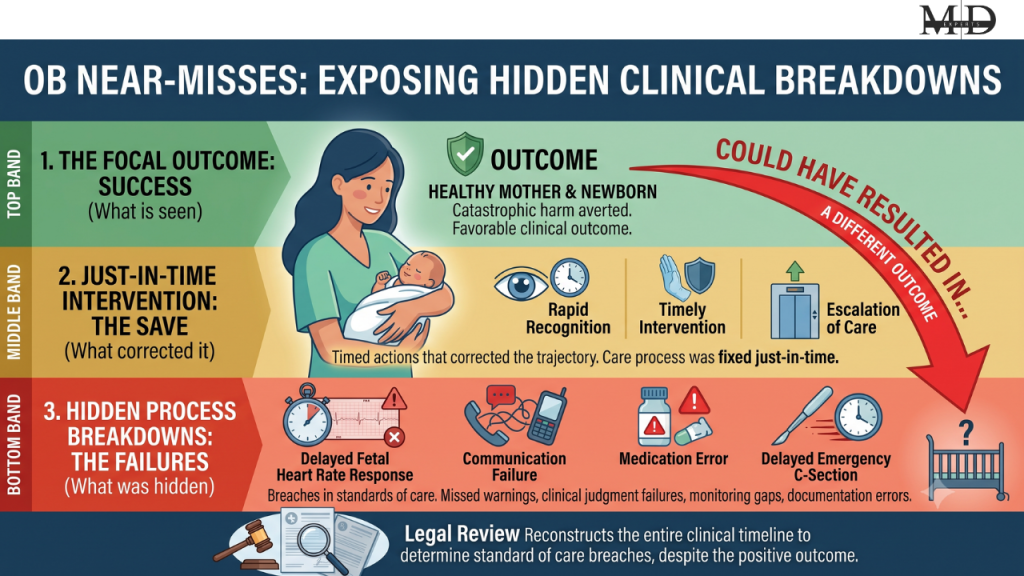
These cases are often considered successful outcomes. But from a medical-legal perspective, an OB near miss can reveal something important: a breakdown in the care process that could have resulted in a very different outcome.
For attorneys evaluating potential malpractice cases, recognizing these events can be critical.
What Is an OB Near Miss?
An obstetric near miss occurs when a pregnant or postpartum patient experiences a serious complication or potentially harmful error but survives or avoids significant injury because the problem is eventually recognized and addressed.
- Delayed response to non-reassuring fetal heart rate patterns
- Delayed treatment of severe hypertension or preeclampsia
- Significant postpartum hemorrhage that is eventually controlled
- Medication errors caught before serious injury occurs
- Delayed emergency cesarean delivery
- Communication or handoff failures
- Delayed recognition of maternal deterioration
- Inadequate monitoring following a high-risk delivery
The World Health Organization recognizes maternal near-miss events as important opportunities to evaluate the quality and safety of maternal healthcare.
Why OB Near Misses Matter in Litigation
A near miss does not automatically mean malpractice occurred. However, it may expose problems in clinical judgment, communication, monitoring, documentation, or escalation of care.
Consider a case involving fetal distress. The newborn ultimately does well, but the medical record shows a prolonged period of concerning fetal monitoring before delivery.
A basic review may focus on the healthy outcome.
A more detailed OB near miss malpractice review asks different questions:
- When did the concerning pattern begin?
- When was it recognized by the clinical team?
- When was the physician notified?
- What interventions were attempted?
- Was escalation of care timely?
- How long did it take to proceed to delivery?
- Were there communication or staffing issues?
- Does the documentation accurately reflect the timeline?
The answers may reveal whether the favorable outcome resulted from appropriate care—or from an intervention that occurred just in time.
When the Timeline Matters
Obstetric cases are particularly dependent on timing. Minutes can make a significant difference when a patient's condition or fetal status is deteriorating.
That is why an obstetric adverse events legal review should reconstruct the entire clinical timeline rather than examining individual notes in isolation.
Relevant records may include:
- Fetal monitoring strips
- Nursing notes
- Physician progress notes
- Medication administration records
- Vital-sign trends
- Laboratory results
- Operative and anesthesia records
- Neonatal records
- Transfer and handoff documentation
- Relevant communication records
The goal is to determine what happened, when it happened, who knew about it, and how the clinical team responded.
Common OB Near Misses Worth a Closer Look
Fetal Distress
Delayed recognition or response to abnormal fetal heart rate patterns can be an important area of review. Even when the infant is ultimately healthy, the timeline may reveal delays in physician notification, intervention, or delivery.
Maternal Hemorrhage
Postpartum hemorrhage can become life-threatening quickly. A patient who recovers after significant bleeding may still warrant review of whether the hemorrhage was recognized promptly and whether appropriate interventions and escalation occurred.
Severe Hypertension and Preeclampsia
Severe hypertension and preeclampsia can progress rapidly. A near miss may involve warning signs that were present but not recognized or treated promptly.
Medication Errors
Medication errors during pregnancy, labor, delivery, or postpartum care can include incorrect medications, dosing errors, delayed treatment, or failures to recognize contraindications. When an error is caught before causing harm, it may never become a reported claim—but it can still deserve medical review.
Communication Failures
Obstetric care often involves multiple providers, nurses, specialists, and shifts. A missed handoff or delayed communication can contribute to a dangerous delay in care.
ACOG emphasizes communication, teamwork, and the reporting and analysis of errors and near misses as important components of obstetric patient safety.
The Difference Between a Near Miss and Malpractice
It is important not to assume that every adverse event or near miss represents negligence.
Some complications are unavoidable despite appropriate care. Others may involve an error that did not cause injury. A viable malpractice claim generally requires a careful evaluation of the applicable standard of care, whether that standard was breached, and whether the breach caused or contributed to an injury.
That is where an experienced medical expert can make a difference.
A detailed review can help distinguish:
An unavoidable complication
from
A potentially preventable adverse event.
It can also help attorneys determine whether additional investigation is warranted before making decisions about a case.
Are Some OB Claims Never Reported?
Potential unreported OB claims may never receive a full medical-legal review because the patient recovered, the event was characterized as a complication, or no obvious injury was identified.
But the absence of catastrophic harm does not necessarily mean there was no deviation from the standard of care.
A near miss can sometimes provide insight into a broader pattern of clinical or system failures. Reviewing the event may also reveal whether similar problems occurred elsewhere in the patient's care.
The objective is not to turn every near miss into litigation. It is to determine, based on the medical evidence, whether the care warrants further legal evaluation.
How MDExperts Can Help
At MDExperts, we connect attorneys with qualified medical experts who can assist with complex medical-legal matters.
Our experts can help with medical record review, standard-of-care analysis, causation assessment, and evaluation of cases involving obstetric complications and adverse events.
For attorneys handling a suspected obstetric error, delayed intervention, maternal complication, fetal distress, or other near miss, an early medical review can help identify the critical issues and determine whether the case has merit.
Have an obstetric case that needs medical expert review? Contact MDExperts to discuss your case and expert needs.
References
1. World Health Organization (WHO) - The Near-Miss Approach for Maternal Health
Accessed September 03, 2026
2. Centers for Disease Control and Prevention (CDC) – Severe Maternal Morbidity
Accessed September 03, 2026
3. American College of Obstetricians and Gynecologists (ACOG) – Patient Safety in Obstetrics and Gynecology
Accessed September 03, 2026
4. American College of Obstetricians and Gynecologists (ACOG) – Severe Maternal Morbidity: Screening and Review
Accessed September 03, 2026