
Accurate and timely diagnosis is one of the most important responsibilities of hospitalists. Because hospitalists manage a wide range of acutely ill patients, often with incomplete histories and evolving symptoms, the risk of diagnostic error remains a significant challenge. While most patients receive appropriate care, delayed or missed diagnoses can lead to serious complications, prolonged hospital stays, increased healthcare costs, and, in some cases, medical malpractice claims.
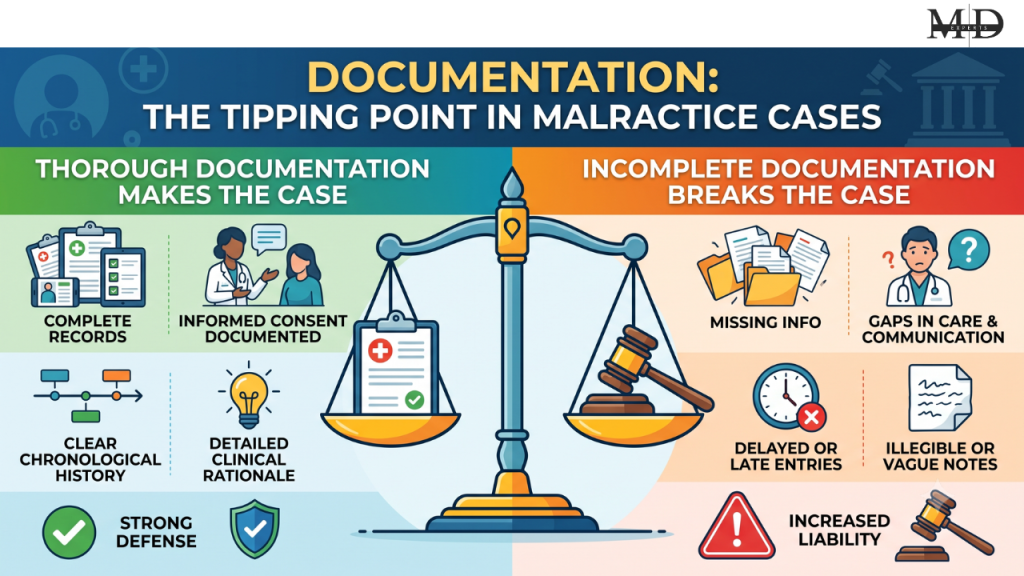
Whether a case involves delayed diagnosis, surgical complications, medication errors, or informed consent disputes, thorough and accurate documentation can significantly influence the outcome. Conversely, incomplete or inconsistent records may weaken even the strongest clinical defense.
In this article, we'll explore why medical documentation malpractice issues are so common, how documentation affects litigation, and what healthcare professionals can do to reduce risk.
Why Medical Documentation Matters
Medical records serve multiple purposes. They support continuity of care, facilitate communication between healthcare providers, ensure regulatory compliance, and provide a detailed account of clinical decision-making.
From a legal standpoint, documentation creates a timeline of events and demonstrates what care was provided, why certain decisions were made, and how the patient responded to treatment.
In malpractice litigation, documentation often becomes the primary evidence because it reflects the care delivered at the time—not recollections months or years later.
When Poor Documentation Creates Liability
Healthcare providers may deliver appropriate care, but if it isn't properly documented, proving that care becomes much more difficult.
Common documentation problems include:
- Missing or incomplete patient histories
- Lack of documented informed consent
- Delayed chart entries without explanation
- Copy-and-paste errors from previous encounters
- Missing medication changes or follow-up instructions
- Inconsistent documentation between providers
- Illegible or ambiguous notes
- Failure to document patient education or refusal of treatment
These issues can create uncertainty about what actually occurred and may increase poor documentation liability during legal proceedings.
Courts generally rely on documented facts. If an important clinical action was not recorded, opposing experts may argue that it never happened.
Documentation Is More Than a Checklist
High-quality documentation demonstrates clinical reasoning—not simply completed forms.
Strong documentation should clearly explain:
- Patient symptoms and presenting concerns
- Assessment findings
- Differential diagnosis
- Clinical decision-making process
- Diagnostic testing rationale
- Treatment options discussed
- Risks and benefits explained
- Follow-up recommendations
- Patient understanding and agreement
Detailed notes allow reviewers to understand why a provider made a particular decision based on the information available at that moment.
Documentation Standards in Healthcare
Maintaining consistent documentation standards healthcare organizations expect helps improve both patient safety and legal defensibility.
Best practices include:
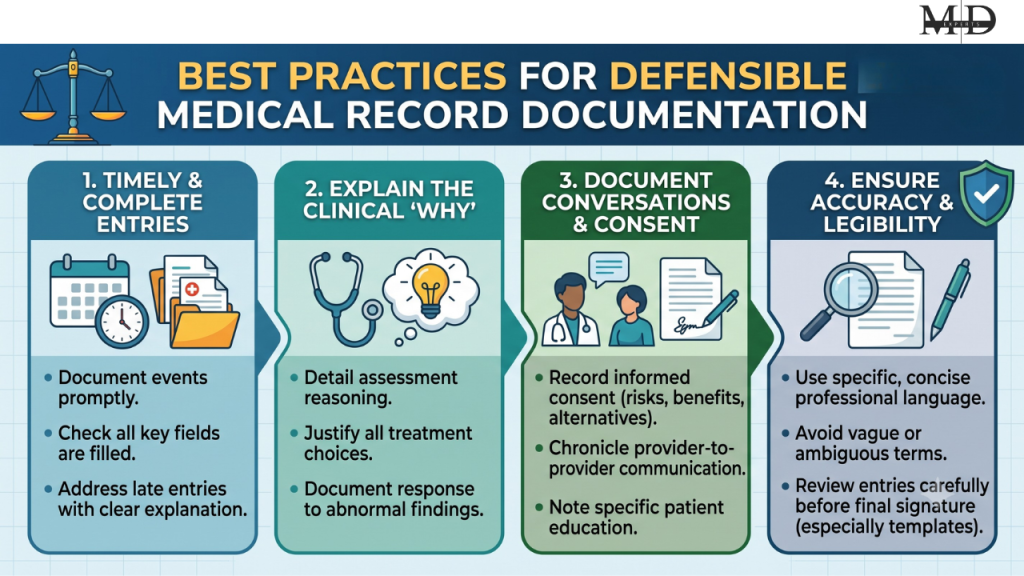
- Chart in real time whenever possible.
- Record objective findings rather than assumptions.
- Clearly document informed consent discussions.
- Include patient questions and responses.
- Correct errors according to organizational policy—never alter or delete records improperly.
- Explain late entries appropriately.
- Ensure documentation matches orders, prescriptions, and diagnostic results.
- Avoid unnecessary copy-and-paste documentation.
Electronic health records have improved accessibility but have also introduced new risks, including template overuse and documentation duplication. Providers should review automatically generated information carefully before signing records.
How Documentation Supports a Malpractice Defense
One of the strongest forms of malpractice defense documentation is a complete, chronological, and internally consistent medical record.
Well-documented records can demonstrate:
- Appropriate clinical judgment
- Adherence to accepted standards of care
- Timely follow-up
- Patient counseling
- Shared decision-making
- Compliance with clinical guidelines
- Appropriate referrals and consultations
Even when complications occur—which are sometimes unavoidable—good documentation helps distinguish an expected medical risk from negligent care.
Medical experts frequently rely on documentation when evaluating whether the standard of care was met.
Common Documentation Mistakes Seen During Case Reviews
Medical experts reviewing malpractice claims often identify recurring documentation issues such as:
Incomplete History
Missing relevant medical history, medications, allergies, or risk factors can make clinical decisions appear unsupported.
Missing Informed Consent
Failing to document informed consent discussions may raise questions about whether patients fully understood the risks and alternatives.
Contradictory Notes
Differences between nursing documentation, physician notes, and specialist consultations can create credibility concerns.
Altered Records
Late modifications without appropriate notation may damage provider credibility and raise questions about record integrity.
Lack of Follow-Up Documentation
Failure to document test result review, patient notification, or follow-up recommendations can become central issues in delayed diagnosis claims.
The Role of Medical Expert Review
Medical records rarely tell the entire story on their own. Experienced medical experts analyze documentation alongside clinical guidelines, timelines, diagnostic findings, and the applicable standard of care.
They evaluate questions such as:
- Was documentation consistent with accepted medical practice?
- Did the records support the provider's clinical decisions?
- Were important findings omitted?
- Did documentation accurately reflect patient care?
- Could missing documentation have influenced patient outcomes?
A thorough expert review helps attorneys understand both the strengths and weaknesses of a case before litigation proceeds.
Practical Tips to Improve Documentation
Healthcare professionals can reduce documentation-related risk by adopting consistent habits:
- Document promptly after each patient encounter.
- Record clinical reasoning—not just diagnoses.
- Avoid vague phrases such as "patient doing well."
- Clearly explain abnormal findings.
- Document patient education and informed refusal.
- Review templates carefully before signing.
- Maintain consistency across all members of the care team.
- Follow organizational documentation policies.
Good documentation benefits patient care first—and legal protection second.
Why Documentation Remains One of the Most Important Pieces of Evidence
Medical records often become the foundation upon which malpractice cases are evaluated. Strong documentation provides a reliable account of the care delivered, while gaps or inconsistencies may create unnecessary legal challenges.
Although documentation alone cannot prevent litigation, it can substantially strengthen a provider's position by accurately reflecting clinical judgment, communication, and adherence to accepted standards of care.
Healthcare professionals who prioritize accurate, timely, and comprehensive documentation not only improve continuity of care but also reduce the likelihood that documentation deficiencies become a central issue in future malpractice claims.
Partner with MDExperts for Trusted Medical Expert Review
When documentation becomes a key issue in medical malpractice litigation, experienced medical experts can provide the objective analysis attorneys need.
MDExperts connects legal professionals with highly qualified physician experts across numerous specialties who carefully evaluate medical records, assess documentation quality, determine whether the standard of care was met, and provide clear, evidence-based opinions for case review, deposition, and trial.
Our network includes experienced specialists across emergency medicine, OB/GYN, neurology, orthopedics, surgery, anesthesiology, hospital medicine, family medicine, radiation oncology, and traumatic brain injury review.
Whether you're evaluating a potential claim or preparing an existing case, our expert network can help clarify complex medical issues and strengthen your case strategy.
Contact MDExperts today to discuss your case and connect with the right medical expert for your needs.
References
1. Centers for Medicare & Medicaid Services (CMS) – Documentation Matters Toolkit
Accessed July 20, 2026
2. PubMed – Strategies for Improving Physician Documentation in the Emergency Department: A Systematic Review
Accessed July 20, 2026
3. PubMed – Nursing Malpractice: The Importance of Documentation, or Saved by the Pen!
Accessed July 20, 2026