
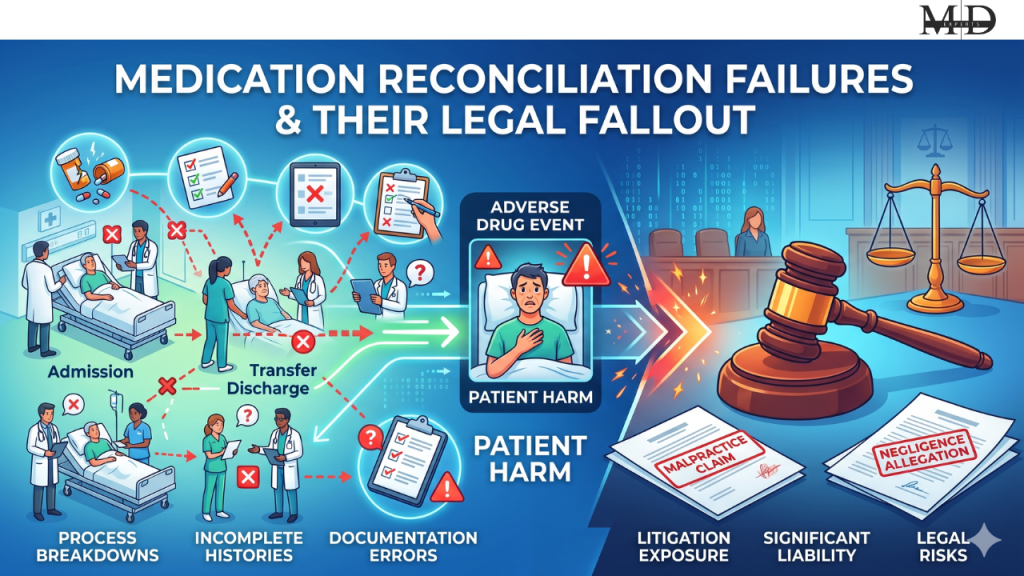
However, when the process breaks down, the consequences can extend beyond patient harm. Healthcare organizations, providers, and facilities may face significant legal exposure stemming from medication reconciliation malpractice claims, allegations of drug reconciliation negligence, and costly medication discrepancies litigation.
In this blog, we examine how medication reconciliation failures occur, the legal risks they create, and what healthcare organizations can do to reduce liability while improving patient safety.
Understanding Medication Reconciliation
Medication reconciliation is the process of creating the most accurate list possible of all medications a patient is taking and comparing that list against physician orders during admission, transfer, and discharge. The goal is to identify and resolve discrepancies before they result in harm.
The process generally involves:
- Collecting a complete medication history
- Verifying medication names, doses, frequencies, and routes
- Comparing current medications with new orders
- Resolving discrepancies
- Communicating updated medication information to all relevant care providers
Research has shown that medication discrepancies frequently occur during transitions of care, making reconciliation a critical patient safety measure.
Common Medication Reconciliation Failures
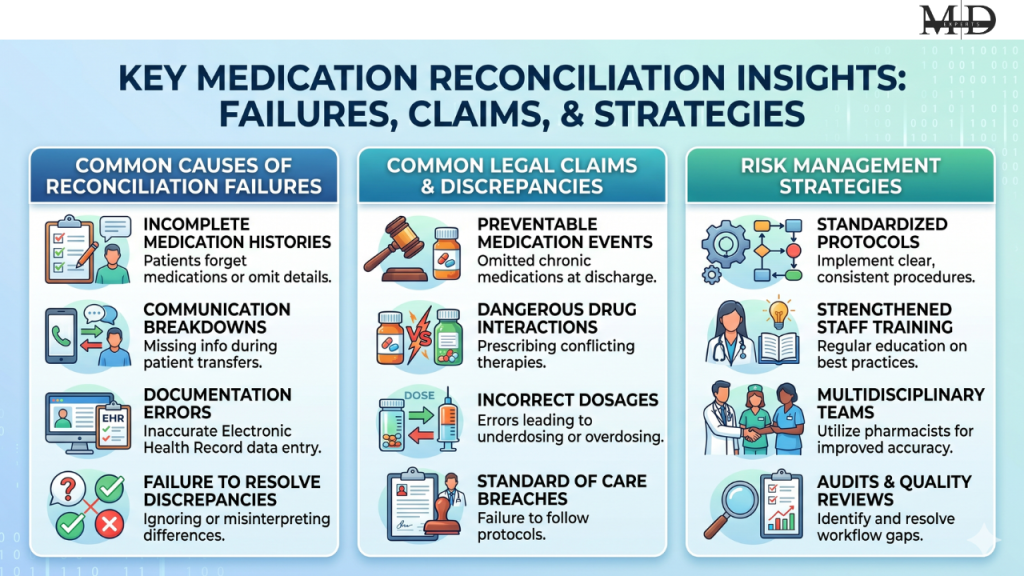
Despite established protocols, medication reconciliation errors remain alarmingly common in hospital settings. Several factors contribute to these failures.
Incomplete Medication Histories
Patients may forget medications, omit over-the-counter products, or provide incomplete information. If clinicians fail to verify medication histories using multiple sources, significant discrepancies can occur.
Communication Breakdowns
Transitions between departments, facilities, or providers create opportunities for communication failures. Missing information during handoffs can lead to omitted or duplicated medications.
Documentation Errors
Incorrect data entry, outdated medication lists, and inaccurate electronic health record documentation can result in dangerous prescribing decisions.
Failure to Resolve Discrepancies
Identifying discrepancies is only part of the process. Failure to investigate and reconcile differences can leave patients vulnerable to medication-related harm.
Technology and Workflow Challenges
Electronic health records have improved documentation capabilities, but interoperability gaps, alert fatigue, and inconsistent workflows continue to contribute to medication reconciliation failures.
When Medication Errors Become Legal Claims
Not every medication error results in litigation. However, when a reconciliation failure causes patient injury, healthcare providers may face allegations of negligence.
A typical medication reconciliation malpractice claim may involve:
- Failure to obtain a complete medication history
- Failure to identify medication conflicts
- Failure to communicate medication changes
- Failure to document reconciliation activities
- Failure to follow established institutional protocols
Plaintiffs generally must demonstrate that a healthcare provider breached the accepted standard of care and that the breach directly caused patient harm.
Medication Discrepancies Litigation: Common Scenarios
Medication discrepancies litigation often arises from preventable events such as:
Omitted Medications
A patient's chronic medication is unintentionally discontinued during hospitalization and not restarted at discharge.
Duplicate Therapies
Multiple providers prescribe medications with overlapping effects, increasing the risk of toxicity or adverse events.
Incorrect Dosages
Errors during reconciliation lead to overdosing or underdosing, resulting in serious clinical complications.
Dangerous Drug Interactions
Incomplete medication lists prevent clinicians from recognizing potentially harmful interactions.
Discharge Medication Errors
Patients receive inaccurate discharge instructions that conflict with their prescribed treatment plans.
In many of these cases, expert medical review becomes essential to determine whether the standard of care was met and whether the alleged error contributed to patient injury.
The Growing Focus on Drug Reconciliation Negligence
Courts and healthcare regulators increasingly recognize the importance of medication reconciliation as a fundamental patient safety process.
As healthcare systems become more complex, allegations of drug reconciliation negligence often focus on:
- Inadequate reconciliation policies
- Lack of staff training
- Failure to follow established protocols
- Poor documentation practices
- Ineffective communication during transitions of care
Organizations that cannot demonstrate consistent reconciliation practices may face heightened scrutiny during litigation.
Risk Management Strategies for Healthcare Organizations
Reducing the likelihood of medication reconciliation failures requires a comprehensive approach.
Standardize Reconciliation Processes
Organizations should implement clear protocols that define responsibilities at every transition point.
Strengthen Staff Training
Regular education ensures that physicians, nurses, pharmacists, and other clinicians understand reconciliation requirements and best practices.
Improve Documentation
Accurate and timely documentation can be critical in both patient care and legal defense.
Utilize Multidisciplinary Teams
Pharmacist involvement has been shown to improve medication accuracy and reduce discrepancies.
Conduct Audits and Quality Reviews
Routine audits help identify workflow gaps before they contribute to patient harm.
Leverage Expert Case Review
Independent medical experts can help healthcare organizations evaluate adverse events, identify system failures, and assess potential liability exposure.
The Role of Medical Experts in Medication Reconciliation Cases
When litigation arises, expert medical analysis often plays a pivotal role. Medical experts evaluate whether providers met the applicable standard of care, assess causation, and explain complex clinical issues to attorneys, insurers, and courts.
Medication reconciliation cases frequently require expertise in:
- Hospital medicine
- Pharmacy practice
- Nursing standards
- Patient safety protocols
- Healthcare documentation systems
Accurate expert review can help distinguish unavoidable complications from preventable errors and provide critical insight into case merits.
How MDExperts Can Help
At MDExperts, we provide comprehensive medical expert witness and case review services for healthcare organizations, insurers, attorneys, and risk management professionals. Our network of highly qualified physicians and clinical specialists can assist in evaluating medication reconciliation malpractice claims, analyzing cases involving medication reconciliation errors in hospital settings, and assessing allegations related to medication discrepancies litigation and drug reconciliation negligence.
Whether you need an independent medical review, expert witness support, or clinical case analysis, our team can help you navigate complex medication-related disputes with confidence.
Contact MDExperts today to discuss your case and connect with the right medical expert for your needs.
Learn more about our hospitalist experts.
Conclusion
Medication reconciliation remains one of the most important safeguards against preventable medication-related harm. Yet failures in the process continue to expose patients to significant risks and healthcare organizations to substantial legal liability.
As scrutiny around medication safety grows, organizations must prioritize accurate reconciliation practices, effective communication, and robust documentation. By proactively addressing vulnerabilities and leveraging expert clinical support when issues arise, healthcare providers can better protect both patients and their organizations from the legal fallout of medication reconciliation failures.
References
1.Agency for Healthcare Research and Quality (AHRQ) – Medication Reconciliation Primer
Accessed June 09, 2026
2. AHRQ MATCH Toolkit for Medication Reconciliation
Accessed June 09, 2026
3. World Health Organization – Medication Without Harm Initiative
Accessed June 09, 2026
4. WHO Medication Without Harm Policy Brief (2024)
Accessed June 09, 2026