
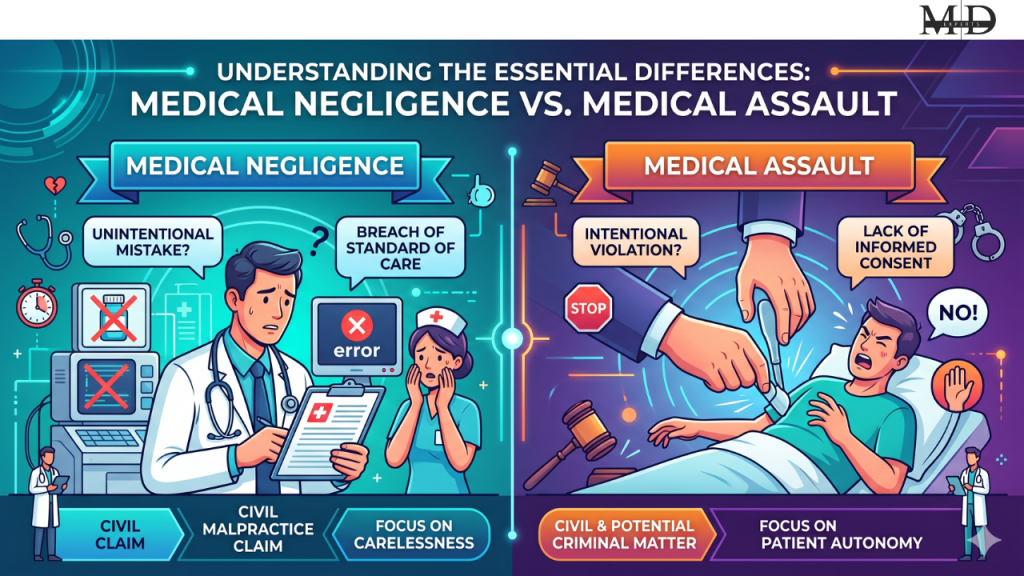
In healthcare, not every adverse medical outcome is treated the same under the law. Some incidents may arise from human error, while others may involve intentional misconduct. Understanding the distinction between medical negligence vs medical assault is critical for healthcare providers, legal professionals, insurers, and patients alike.
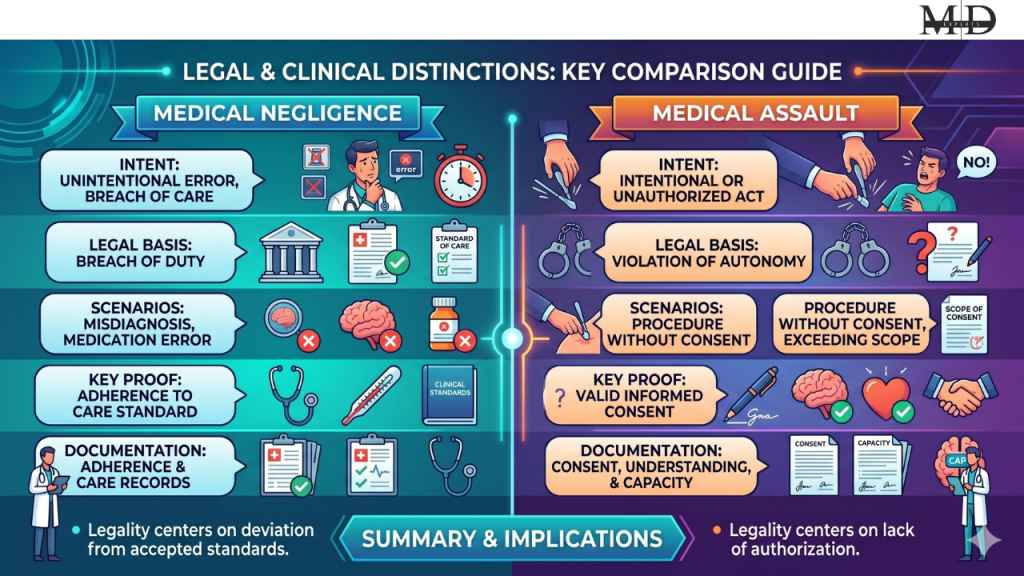
While both situations can lead to patient harm, the legal consequences, intent, and clinical implications differ significantly. This article explores the key differences between medical negligence and medical assault, the importance of informed consent, and how expert medical review can help establish the facts in complex medico-legal cases.
What Is Medical Negligence?
Medical negligence occurs when a healthcare professional fails to provide the accepted standard of care, resulting in patient injury or harm. Negligence is generally considered unintentional and may arise from errors in judgment, lack of communication, delayed diagnosis, medication mistakes, or procedural oversights.
Examples of medical negligence include:
• Misdiagnosis or delayed diagnosis
• Surgical errors
• Medication dosage mistakes
• Failure to monitor a patient appropriately
• Inadequate follow-up care
In most negligence claims, the key legal question is whether another reasonably competent healthcare provider would have acted differently under similar circumstances.
The concept of negligence vs intentional harm healthcare becomes especially important here because negligence does not require malicious intent. Instead, it focuses on whether the provider breached their duty of care.
What Is Medical Assault?
Medical assault, by contrast, involves intentional or unauthorized physical contact during medical treatment. The medical assault legal definition generally refers to performing a procedure or intervention without the patient’s informed consent or against their explicit wishes.
Medical assault may occur when:
• A procedure is performed without consent
• A doctor exceeds the scope of consent provided
• Treatment continues after consent is withdrawn
• A patient is physically restrained or treated unlawfully
Unlike negligence, assault centers on intentional conduct or unauthorized touching rather than carelessness.
For example, if a patient consents to a diagnostic procedure but undergoes an entirely different treatment without authorization, the issue may move beyond malpractice into medical assault territory.
Medical Negligence vs Medical Assault: Key Legal Differences
| Factor | Medical Negligence | Medical Assault |
|---|---|---|
| Intent | Usually unintentional | Intentional or unauthorized act |
| Basis of Claim | Breach of standard of care | Lack of consent or unlawful touching |
| Focus | Clinical error or omission | Violation of patient autonomy |
| Consent | May exist but care was substandard | Consent absent, invalid, or exceeded |
| Legal Nature | Civil malpractice claim | Civil and potentially criminal matter |
Understanding the distinction between medical negligence vs medical assault is essential because the legal remedies and evidentiary standards may differ significantly.
The Critical Role of Patient Consent
One of the most important factors separating negligence from assault is consent. The principle of patient consent malpractice is deeply rooted in both medical ethics and legal standards.
Informed consent means the patient must:
• Understand the nature of the procedure
• Be informed of risks and alternatives
• Voluntarily agree to treatment
• Have the capacity to make the decision
Healthcare providers are legally and ethically obligated to ensure patients understand what they are consenting to before treatment begins.
If consent is absent or improperly obtained, even a technically successful procedure may create legal exposure.
International healthcare and regulatory organizations consistently emphasize informed consent as a core patient right and ethical obligation.
Clinical Complexity in Real-World Cases
In practice, distinguishing between negligence and assault is not always straightforward. Clinical emergencies, communication barriers, documentation gaps, and evolving treatment decisions can complicate the legal analysis.
For example:
• Was the patient fully informed of the risks?
• Did the provider act within the agreed treatment scope?
• Was emergency intervention necessary?
• Was consent implied under urgent circumstances?
These questions often require detailed medical record review and expert interpretation.
Why Expert Medical Review Matters
Medical-legal disputes demand both clinical understanding and legal clarity. Independent expert analysis can help determine:
• Whether the standard of care was breached
• If informed consent was appropriately obtained
• Whether patient harm resulted from negligence or intentional conduct
• How clinical documentation supports or contradicts allegations
At MDExperts , our team provides independent medical expert review services to support attorneys, insurers, healthcare organizations, and legal professionals handling complex medico-legal matters.
Our experts assist in evaluating:
• Medical malpractice claims
• Consent-related disputes
• Standard of care assessments
• Causation analysis
• Expert witness preparation
If you need expert medical case review or medico-legal consultation, visit our contact page:
Contact MDExperts.
Final Thoughts
The distinction between medical negligence vs medical assault lies primarily in intent, authorization, and patient consent. Negligence generally involves unintentional deviation from accepted medical standards, while medical assault centers on unauthorized or intentional conduct.
As healthcare delivery grows increasingly complex, accurate medical review and expert interpretation become essential in resolving disputes fairly and objectively.
Understanding these differences helps protect patient rights, improve clinical accountability, and support more informed legal decision-making.
References
1. FDA – Informed Consent Guidance
Accessed May 18, 2026
2. MedlinePlus – Informed Consent in Healthcare
Accessed May 18, 2026
3. World Health Organization – Human Rights and Health
Accessed May 18, 2026