

In today’s healthcare environment, certain patient encounters consistently appear in high-risk patient scenarios malpractice cases. For physicians, these situations require heightened clinical vigilance, thorough documentation, and strong communication. For attorneys, these cases often reveal recurring liability trends, documentation gaps, and breakdowns in the standard of care.
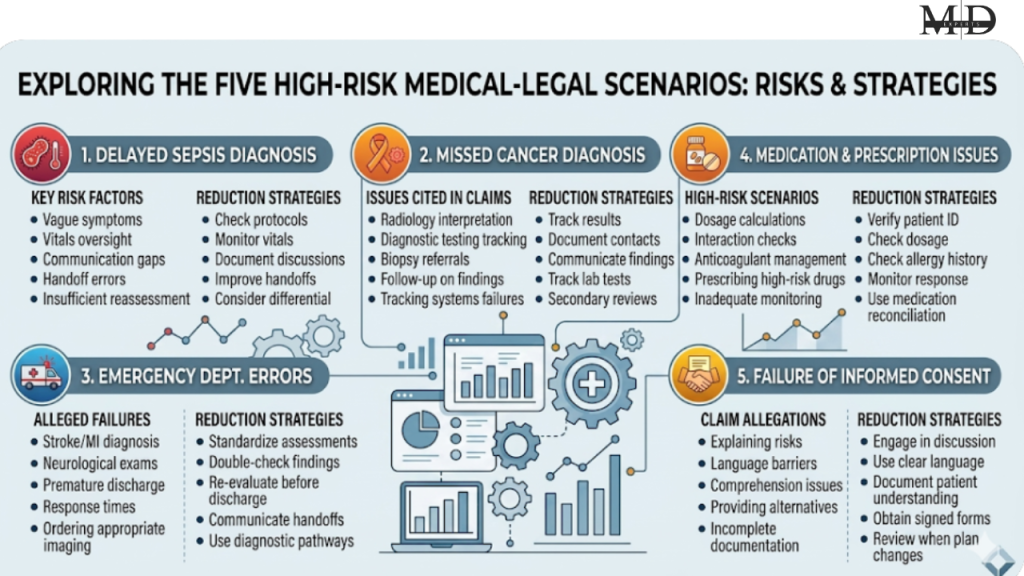
Understanding these medical legal high-risk scenarios can help reduce patient harm, improve outcomes, and minimize exposure to costly litigation. Below are five of the most common and consequential malpractice risk cases seen across healthcare systems today.
1. Delayed Diagnosis of Sepsis
Sepsis remains one of the most dangerous and frequently litigated diagnostic failures in healthcare. Early symptoms can appear vague or non-specific, leading clinicians to underestimate the severity of the condition.
Common risk factors in sepsis-related malpractice claims include:
• Failure to recognize deteriorating vital signs
• Inadequate reassessment after discharge
• Delayed escalation to specialists or ICU teams
• Poor communication during handoffs
• Failure to consider sepsis in differential diagnosis
Studies reviewing closed medico-legal claims found that many patients had multiple healthcare visits before sepsis was recognized. Communication failures and inadequate reassessment were recurring themes in these malpractice claims patterns.
Why This Scenario Is High Risk
Sepsis progresses rapidly, and delays in diagnosis can lead to organ failure or death. From a legal standpoint, these cases often involve allegations that providers failed to identify obvious warning signs or failed to act urgently.
Risk Reduction Strategies
• Reassess patients with worsening or persistent symptoms
• Document clinical reasoning clearly
• Use standardized sepsis screening protocols
• Ensure strong discharge and follow-up instructions
• Improve interdepartmental communication
2. Missed or Delayed Cancer Diagnosis
Cancer-related diagnostic delays continue to be among the most significant high-risk patient scenarios malpractice claims nationwide. These cases commonly involve failures in follow-up, interpretation of imaging, or communication of abnormal test results.
Frequently cited issues include:
• Missed radiology findings
• Delayed biopsy referrals
• Failure to track abnormal lab results
• Lack of follow-up after suspicious symptoms
• Inadequate patient notification systems
Research into outpatient malpractice claims found that missed or delayed cancer diagnoses were among the most common diagnostic errors associated with patient harm.
Why This Scenario Is High Risk
Cancer progression due to delayed diagnosis often creates substantial damages, including worsened prognosis, increased treatment burden, and reduced survival rates.
Risk Reduction Strategies
• Implement closed-loop test result systems
• Establish reliable follow-up protocols
• Communicate abnormal findings promptly
• Document all patient outreach attempts
• Encourage second reviews of suspicious imaging
3. Emergency Department Diagnostic Errors
Emergency departments operate under intense time pressure, incomplete information, and high patient volume — conditions that contribute heavily to medical legal high-risk scenarios.
Common ED malpractice allegations involve:
• Failure to diagnose stroke or myocardial infarction
• Premature discharge
• Inadequate neurological examinations
• Anchoring bias on less serious conditions
• Failure to order appropriate imaging or labs
Closed-claim studies show that diagnostic errors in emergency medicine, frequently stem from communication breakdowns, cognitive bias, and incomplete evaluations.
Why This Scenario Is High Risk
Emergency physicians often make rapid decisions with limited history, increasing the likelihood of missed critical diagnoses.
Risk Reduction Strategies
• Re-evaluate patients before discharge
• Avoid relying solely on initial impressions
• Use evidence-based diagnostic pathways
• Improve handoff communication
• Document differential diagnoses thoroughly
4. Medication Management and Prescription Errors
Medication-related incidents are another major category of malpractice risk cases. These claims can involve prescribing, dispensing, monitoring, or follow-up failures.
High-risk medication scenarios include:
• Incorrect dosage calculations
• Dangerous drug interactions
• Anticoagulant management failures
• Opioid prescribing complications
• Failure to monitor high-risk medications
Medication errors become especially dangerous when providers fail to monitor patient response or reassess after treatment changes.
Why This Scenario Is High Risk
Medication errors can cause catastrophic injury quickly, particularly in vulnerable populations such as elderly patients, children, or individuals with multiple comorbidities.
Risk Reduction Strategies
• Use medication reconciliation processes
• Monitor high-risk medications closely
• Confirm allergies and contraindications
• Document informed consent discussions
• Provide clear patient instructions
5. Failure to Obtain Proper Informed Consent
Even technically successful procedures can result in litigation when patients claim they were not adequately informed of risks, alternatives, or expected outcomes.
Common informed consent allegations include:
• Failure to explain material risks
• Incomplete documentation
• Use of generic consent forms only
• Lack of discussion regarding alternatives
• Language or comprehension barriers
Many malpractice cases are strengthened when documentation does not clearly demonstrate meaningful patient discussions.
Why This Scenario Is High Risk
Informed consent cases often hinge on documentation credibility and whether the patient truly understood the procedure and associated risks.
Risk Reduction Strategies
• Conduct thorough verbal consent discussions
• Document patient questions and responses
• Use interpreters when necessary
• Avoid relying solely on signed forms
• Revisit consent discussions if treatment plans change
Key Takeaways for Attorneys and Physicians
Across nearly all malpractice claims patterns, several themes consistently emerge:
• Communication failures
• Inadequate documentation
• Delayed diagnosis
• Poor follow-up systems
• Failure to reassess deteriorating patients
Attorneys handling complex healthcare litigation increasingly rely on specialty-specific expert review to evaluate standard of care, causation, and damages. Physicians and healthcare organizations likewise benefit from proactive risk analysis to reduce exposure and improve patient outcomes.
At MDExperts, our network includes experienced specialists across emergency medicine, OB/GYN, neurology, orthopedics, surgery, anesthesiology, hospital medicine, family medicine, radiation oncology, and traumatic brain injury review.
Contact MDExperts
To learn more about our expert witness services and case review support, visit the MDExperts Contact Page.
References
1. PubMed – Diagnostic Delays in Sepsis: Lessons Learned From a Retrospective Study of Canadian Medico-Legal Claims
Accessed May 11, 2026
2. Canadian Medical Protective Association – Diagnostic Delays in Sepsis
Accessed May 11, 2026
3. NCBI Bookshelf – Medical Malpractice Overview
Accessed May 11, 2026
4. AHRQ PSNet – Missed and Delayed Diagnoses in the Ambulatory Setting
Accessed May 11, 2026
5. Annals of Emergency Medicine – Missed and Delayed Diagnoses in the Emergency Department
Accessed May 11, 2026