
Chronic conditions like diabetes, hypertension, and heart disease are often managed through what appears to be routine, ongoing care. Yet, beneath this routine lies one of the most significant—and frequently overlooked—sources of legal risk in healthcare.
For providers, what feels like standard follow-ups and medication adjustments can quickly evolve into chronic disease management malpractice if care falls below accepted standards. For legal teams, these cases often reveal patterns of missed opportunities rather than dramatic one-time errors.
The Hidden Risk in “Routine” Chronic Care
Chronic disease management is not episodic—it is continuous, evolving, and highly dependent on vigilance. When that vigilance slips, the consequences can be severe.
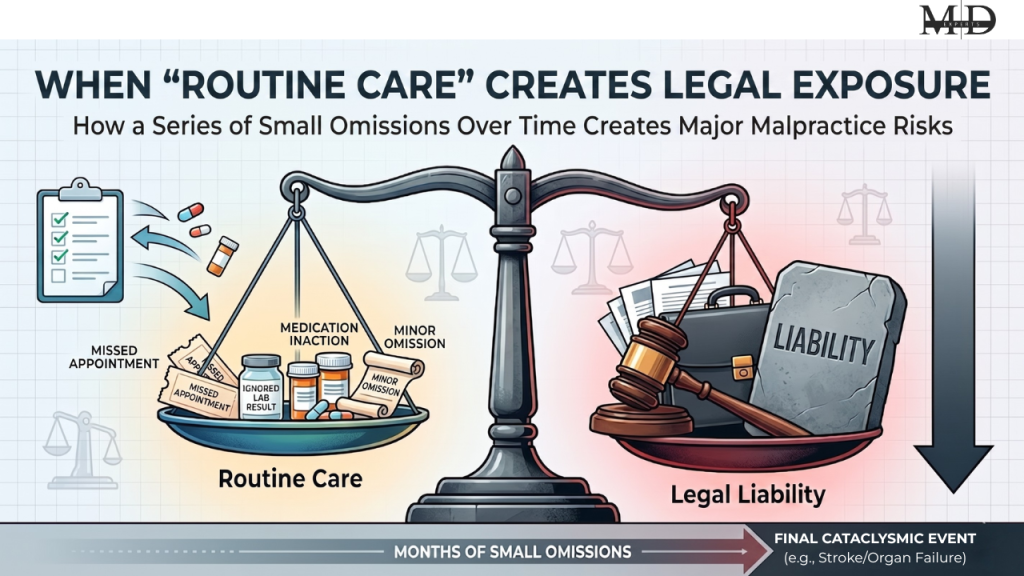
Medical malpractice is broadly defined as care that falls below accepted professional standards and causes harm. In chronic care settings, this often manifests not as a single mistake, but as a series of small omissions over time.
This is where routine care legal exposure becomes critical:
• Missed follow-ups
• Failure to adjust medications
• Ignored abnormal lab results
• Lack of specialist referrals
These gaps may appear minor individually—but collectively, they can lead to devastating outcomes such as stroke, organ failure, or amputation.
Why Chronic Disease Mismanagement Leads to Malpractice Claims
Unlike acute care errors, chronic illness cases often develop gradually. This makes them particularly complex—and legally vulnerable.
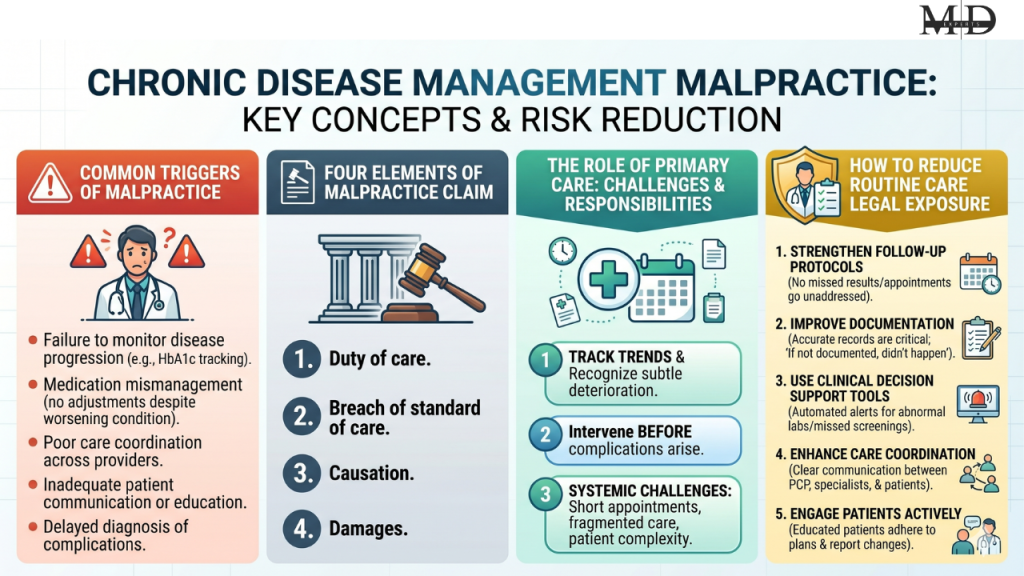
To establish chronic illness malpractice claims, four elements must typically be proven:
1. Duty of care
2. Breach of standard of care
3. Causation
4. Damages
In chronic care, the “breach” is often tied to inaction rather than action.
Common Triggers of Chronic Disease Management Malpractice
• Failure to monitor disease progression (e.g., not tracking HbA1c in diabetics)
• Medication mismanagement (no adjustments despite worsening condition)
• Poor care coordination across providers
• Inadequate patient communication or education
• Delayed diagnosis of complications
Primary care physicians are especially exposed, as they serve as the central coordinators of long-term care. Studies show that adverse events in primary care—where chronic disease management occurs—are not uncommon and can involve medication errors or monitoring failures.
The Role of Primary Care: A Double-Edged Sword
Primary care chronic mismanagement is a leading contributor to malpractice risk because of the longitudinal nature of care.
Primary care providers are expected to:
• Track trends over time
• Recognize subtle deterioration
• Intervene before complications arise
When these responsibilities are not met, the impact can be catastrophic. Negligent monitoring alone can lead to outcomes like kidney failure, stroke, or death.
At the same time, the system itself creates challenges:
• Short appointment times
• Fragmented care systems
• Increasing patient complexity
These factors increase the likelihood of oversight—and therefore routine care legal exposure.
Why These Cases Are Increasing
Several trends are driving the rise in chronic disease management malpractice:
1. Growing Chronic Disease Burden
Chronic illnesses are more prevalent than ever, increasing the volume of long-term care interactions.
2. Complexity of Treatment
Patients often have multiple conditions (multimorbidity), requiring careful coordination and monitoring.
3. Documentation and Data Trails
Electronic health records create detailed timelines—making it easier to identify gaps in care.
4. Patient Expectations
Patients increasingly expect proactive, coordinated care—not reactive treatment.
The Legal Reality: Small Errors, Big Consequences
Medical malpractice is often associated with dramatic surgical errors. In reality, many claims stem from routine care failures.
• Misdiagnosis alone accounts for roughly one-third of malpractice claims
• Medication and monitoring errors are also major contributors
• Preventable errors occur in up to 15% of medical interventions
In chronic care, these errors accumulate quietly—until a triggering event (e.g., stroke, hospitalization) exposes the breakdown.
How to Reduce Routine Care Legal Exposure
Preventing primary care chronic mismanagement requires a proactive, systems-based approach:
1. Strengthen Follow-Up Protocols
Ensure no abnormal result or missed appointment goes unaddressed.
2. Improve Documentation
“If it’s not documented, it didn’t happen.” Accurate records are critical in defending care decisions.
3. Use Clinical Decision Support Tools
Automated alerts for abnormal labs or missed screenings can reduce oversight.
4. Enhance Care Coordination
Clear communication between primary care, specialists, and patients is essential.
5. Engage Patients Actively
Educated patients are more likely to adhere to care plans and report changes early.
How MDExperts Supports Risk Reduction
At MDExperts, we specialize in analyzing complex medical records to identify where care may have deviated from accepted standards—particularly in chronic care settings where patterns matter more than isolated events.
Our expertise helps:
• Attorneys evaluate chronic illness malpractice claims
• Healthcare organizations identify system gaps
• Experts build defensible, evidence-based opinions
For deeper insights into care standards in this space, explore our Family Medicine page.
Final Thoughts
Chronic disease management may appear routine—but legally, it is anything but.
The greatest risks often arise not from dramatic mistakes, but from missed opportunities over time. As healthcare systems grow more complex, the line between routine care and negligence becomes increasingly scrutinized.
Understanding and addressing chronic disease management malpractice is no longer optional—it is essential for both patient safety and legal protection.
Ready to Strengthen Your Case?
If you’re handling a case involving primary care chronic mismanagement or potential routine care legal exposure, MDExperts can help.
Visit our contact page to connect with our medical experts.
References
1. Forbes Advisor – Medical Malpractice Statistics
Accessed April 22, 2026
2. WorldMetrics – Malpractice Statistics Report (2026)
Accessed April 22, 2026
3. National Library of Medicine – Epidemiology of Malpractice Claims in Primary Care
Accessed April 22, 2026
4. National Library of Medicine – Medical Malpractice Overview
Accessed April 22, 2026