

In primary care, diagnostic testing is a routine and essential part of patient care. Blood work, imaging studies, pathology reports, and screening tests help clinicians identify disease early and guide treatment decisions. But when abnormal results are overlooked or not properly communicated, the consequences can be serious—not only for patients but also for healthcare providers.
Missed test results malpractice cases are increasingly recognized as a significant source of medical liability. Failure to properly review, communicate, or act on diagnostic findings can lead to delayed treatment, worsening conditions, and preventable harm. In many instances, this breakdown in the diagnostic process becomes the basis for malpractice claims.
Why Missed Test Results Create Major Liability Risks
Primary care physicians manage large volumes of patients and diagnostic tests every day. In such complex workflows, the follow-up process can sometimes break down. When test result follow up in primary care fails, the impact can be severe.
Research shows that diagnostic errors—including missed or delayed diagnoses—are among the leading causes of malpractice claims against primary care physicians. One analysis found that diagnostic errors accounted for 46% of liability claims and 68% of indemnity payments in primary care settings.
Similarly, studies of malpractice claims have found that breakdowns in the diagnostic process frequently involve failures such as:
• Not ordering appropriate diagnostic tests
• Failing to track or review test results
• Not creating an adequate follow-up plan
• Delays in referrals to specialists
These failures can result in delayed diagnoses of serious conditions, including cancer, cardiac disease, and infections.
The Role of Abnormal Results Negligence
A critical risk area in malpractice litigation is abnormal results negligence. When test results reveal an abnormal finding, physicians have a duty to:
1. Review the results promptly
2. Interpret them correctly
3. Communicate the findings to the patient
4. Arrange appropriate follow-up care
Failure in any of these steps can lead to serious patient harm. For example, research in primary care settings shows that missed abnormal test results can lead to treatment delays for conditions such as cancer, endocrine disorders, and cardiac disease.
Courts often view missed abnormal results as particularly preventable errors. Unlike complex diagnostic decisions, unreviewed or ignored test findings are frequently seen as clear lapses in standard care.
Diagnostic Follow-Up Liability in Malpractice Cases
The concept of diagnostic follow up liability centers on whether a physician met the accepted standard of care in managing diagnostic information.
Malpractice cases related to missed test results often hinge on several key questions:
• Was the diagnostic test ordered appropriately?
• Were the results received and reviewed in a timely manner?
• Were abnormal findings communicated to the patient?
• Was appropriate follow-up care arranged?
When patients experience harm because of a delay or failure in this process, it may be considered negligence if it can be shown that the provider breached the duty of care and that breach caused injury.
These cases often require expert medical testimony to determine whether the physician’s actions met clinical standards.
Why Follow-Up Failures Occur
Missed results rarely occur due to a single mistake. Instead, they often arise from system-level gaps in healthcare workflows. Common contributing factors include:
• High patient volumes and heavy workloads
• Inadequate tracking systems for test results
• Communication failures between clinicians and laboratories
• Lack of standardized follow-up procedures
• Poor coordination between providers
Experts note that the diagnostic process includes several steps—ordering tests, ensuring test completion, receiving results, interpreting findings, and notifying patients—each of which carries a potential risk for breakdown.
When systems fail to track these steps reliably, abnormal findings may go unnoticed.
Preventing Missed Test Result Malpractice
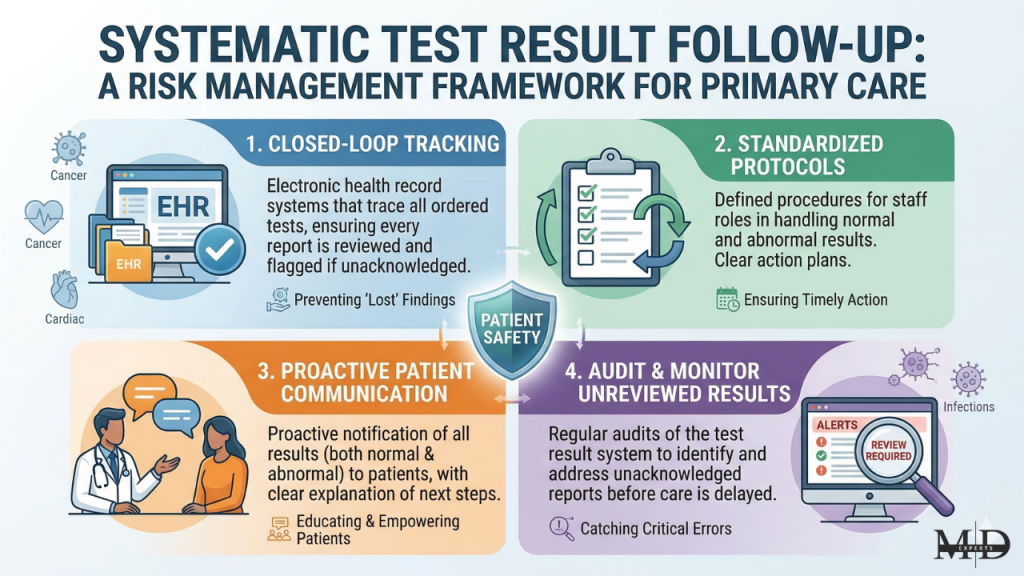
Healthcare organizations can significantly reduce malpractice exposure by strengthening their diagnostic follow-up systems. Best practices include:
1. Implement Closed-Loop Test Result Management
Electronic health record systems can track ordered tests and flag results that have not been reviewed.
2. Standardize Test Result Follow-Up Protocols
Clear procedures should define how abnormal findings are handled and who is responsible for follow-up.
3. Improve Patient Communication
Patients should be notified of both normal and abnormal results and advised about next steps.
4. Monitor Unacknowledged Results
Regular audits can identify results that have not been reviewed within a specified timeframe.
5. Strengthen Care Coordination
Clear documentation and communication between primary care providers, specialists, and diagnostic services can prevent gaps in care.
By addressing these areas, practices can reduce risk while improving patient safety.
The Importance of Expert Medical Review
In cases involving missed test results malpractice, determining whether negligence occurred requires careful clinical analysis. Evaluating the diagnostic process, timelines, and medical decision-making is critical in understanding whether the standard of care was met.
This is where independent medical expertise becomes essential.
At MDExperts, our specialists provide objective medical record reviews and expert witness services in complex medical liability cases. Our team helps attorneys and healthcare organizations evaluate whether failures in test result follow up in primary care, abnormal results negligence, or diagnostic follow up liability contributed to patient harm.
Because many diagnostic follow-up issues occur in primary care settings, our Family Medicine experts have extensive experience reviewing cases involving missed or delayed test result management, patient communication, and diagnostic decision-making.
If you need expert insight into a potential malpractice case, visit our contact page to connect with our medical experts.
References
1. National Center for Biotechnology Information (NCBI) – Missed and delayed diagnoses in the ambulatory setting
Accessed March 17, 2026
2. National Center for Biotechnology Information (NCBI) - The frequency of missed test results and associated treatment delays in a highly computerized health system
Accessed March 17, 2026
3. Agency for Healthcare Research and Quality (AHRQ) – Diagnostic Errors and Patient Safety
Accessed March 17, 2026